Buying an air purifier for the Pacific Northwest has gotten complicated with all the marketing claims flying around. As someone who’s lived through multiple wildfire seasons in Seattle and tested everything from $50 box fan combos to $900 medical-grade units, I learned everything there is to know about what actually works. Today, I’ll share it all with you.
Probably should have led with this section, honestly — picking the wrong purifier doesn’t just waste money. It leaves you breathing smoke while thinking you’re protected.
The Different Purifier Technologies (And Which Ones Actually Work)
Here’s what the marketing materials won’t tell you upfront — not all “air purifiers” actually purify air the same way. Some are fantastic. Others are expensive fans with delusions of grandeur.
HEPA Filtration
True HEPA filters trap 99.97% of particles down to 0.3 microns. Wildfire smoke runs about 0.4-0.7 microns typically, so HEPA catches it reliably. Same goes for pollen, mold spores, pet dander, dust — all the usual PNW offenders.
Watch out for the sneaky labeling though. “HEPA-type” and “HEPA-style” don’t mean anything. Those filters skip the actual HEPA certification and perform way worse. Look for “True HEPA” or “H13 HEPA” specifically if smoke protection matters to you.
Activated Carbon
Carbon handles the stuff HEPA can’t — gases and smells. It chemically bonds with VOCs, smoke odors, and fumes. But here’s what manufacturers hope you don’t notice: a thin carbon cloth layer does almost nothing. Cheap purifiers love throwing in these cosmetic carbon layers.
For real smoke protection, you need at least 2-3 pounds of actual activated carbon pellets or granules. Anything less and you’re basically running a fancy air circulator.
Ionizers and Plasma
These charge particles electrically so they stick to surfaces. Sounds clever until you realize “surfaces” means your walls, furniture, and floors. The particles don’t leave your space — they just relocate. Plus many ionizers spit out ozone as a byproduct, which irritates lungs all on its own.
Skip them for smoke season. HEPA removes particles completely without the ozone headache.
UV-C and Photocatalytic Oxidation
These target germs — bacteria, viruses, mold. Nice for general indoor air quality maybe, but they do nothing against smoke particulates or gases. Marketing teams love bundling these as premium features. Treat them as extras, not essentials.
Getting the Size Right (Most People Mess This Up)
Undersized purifiers are by far the most common mistake. A unit rated for 200 square feet won’t magically clean 400 square feet no matter how long it runs. Physics doesn’t work that way.
What CADR Actually Means
Clean Air Delivery Rate measures how many cubic feet of air gets cleaned per minute for different pollutants — smoke, dust, and pollen each get separate ratings. Higher numbers mean faster cleaning.
The quick math: multiply your room’s square footage by 0.67 to get the minimum smoke CADR you need. So a 300 square foot room needs at least 200 smoke CADR.
During heavy smoke though? That’s just baseline survival. For an actually comfortable indoor space, try matching CADR to square footage directly.

Those Manufacturer Coverage Claims Are Mostly Fantasy
When a box says “covers 500 sq ft” it’s assuming perfect conditions with maybe 2-3 air changes hourly. Smoke events demand 4-6 air changes. Cut their claims in half for realistic smoke coverage.
So that “500 sq ft” purifier? It handles 250 square feet when smoke rolls in. Plan accordingly.
Multi-Room Options
Two approaches make sense:
- Smaller purifiers everywhere: One appropriately-sized unit per occupied room. Costs more, but consistent protection throughout.
- One big unit plus a clean room: Concentrate your best purifier in the bedroom, let HVAC filtration handle the rest. Cheaper, but you’ll need to seal that bedroom tight during bad events.
What I Actually Recommend After Testing Way Too Many Units
That’s what makes picking an air purifier endearing to us Pacific Northwesterners — we get to test them against real smoke regularly. Here’s what actually performs.
Best Overall: Coway Airmega 400
Real-world smoke coverage of maybe 700-800 square feet (ignore the 1,560 claim). Twin HEPA filters, decent activated carbon, and smart sensors that adjust automatically. Filter replacements run about $100 yearly.
Works well for: Living rooms, open layouts, full apartment coverage
Best for Bedrooms: Coway AP-1512HH Mighty
There’s a reason every air quality nerd owns one of these. The 246 smoke CADR handles bedrooms up to 350 square feet comfortably. Runs quiet enough for sleeping. Around $200 upfront with $40 yearly for filters.
Works well for: Bedrooms, home offices, studio apartments
Best Budget Pick: Levoit Core 300
Under $100 gets you real HEPA filtration. The 141 smoke CADR won’t save a large space or handle apocalyptic smoke, but it works fine for small bedrooms under 200 square feet or as backup to your main unit.
Works well for: Tight budgets, small spaces, supplemental use
Best for Serious Smoke: IQAir HealthPro Plus
The nuclear option. HyperHEPA catches particles down to 0.003 microns — that’s hospital territory. Substantial carbon load handles odors. At $900+ it better perform, and honestly it does. Nothing else comes close during severe events.
Works well for: Respiratory conditions, locations with repeated severe smoke, people who want maximum protection
Best Emergency Backup: The Box Fan Trick
When purifiers sell out (happens every bad smoke season), tape four MERV-13 furnace filters to a box fan in a cube shape with the fan on top. Looks ridiculous. Works surprisingly well — studies show comparable performance to commercial HEPA units.
Cost runs about $60 total. Keep the supplies on hand before you need them.
Using Your Purifier Without Wasting It
Buying right is half the battle. Running it wrong throws away most of the benefit.
Where You Put It Matters
- Keep at least 12 inches from walls
- Stay out of corners — airflow gets weird there
- Put it where you actually spend time
- Raise it 2-3 feet off the floor when possible
- Don’t block the intake with furniture or curtains

When and How Hard to Run It
Normal days (AQI under 50): Low setting continuously, or run it 4-6 hours daily to maintain quality.
Moderate haze (AQI 50-100): Medium speed all the time. Keep windows and doors shut.
Smoke events (AQI 100+): Highest setting you can tolerate, running constantly. Seal the room if you can. Filters will wear out faster — that’s fine, that’s what they’re for.
Filter Changes
Clogged filters kill performance fast. Follow the schedules, or shorten them during heavy use:
Pre-filters: Vacuum once a month, swap every 3 months
HEPA filters: Usually 12 months, or sooner if airflow drops noticeably
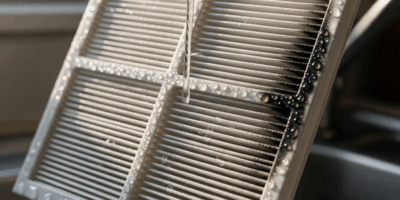
Carbon filters: Every 3-6 months, or immediately after heavy smoke exposure. Carbon saturates invisibly — once full, it stops working entirely and can even release captured stuff back into your air
Setting Up a Clean Room (Your Smoke Season Sanctuary)
When AQI goes nuclear, concentrating your best equipment in one room beats trying to clean the whole house.
How to Set One Up
- Pick a bedroom with few windows and solid door seals
- Install your best purifier, properly sized for the space
- Seal the door gap with a draft stopper or rolled towel
- Tape plastic sheeting over leaky windows
- Keep the door closed when you’re in there
- Blast the purifier on high before entering, then dial it back for comfort

Stock Your Clean Room With
- Water and snacks that won’t spoil
- Books or charged devices for entertainment
- Phone charger
- Any medications you need
- A PM2.5 monitor to confirm it’s actually working
Measuring Whether Any of This Works
Without a monitor, you’re guessing. Get one.
Monitor Recommendations
Awair Element ($150): Tracks PM2.5, VOCs, CO2, temperature, humidity. Looks nice, app works well.
Purple Air Indoor ($200): Lab-grade PM2.5 accuracy. Data feeds into the public Purple Air network too.
Temtop M10 ($70): Basic PM2.5 monitoring that actually works. Good if you just want the essential number.
Reading the Numbers
PM2.5 levels to aim for:
- Under 12 μg/m³ — excellent
- 12-25 μg/m³ — good
- 25-35 μg/m³ — moderate
- Above 35 μg/m³ — not healthy
When outdoor AQI hits 200+, getting indoor PM2.5 under 35 means your setup is helping. Under 25 is genuinely good. Under 12 and your filtration game is strong.

Mistakes I See People Make Constantly
Trusting Room Coverage Claims
Already covered this, but it bears repeating. Verify the smoke CADR. Do the math yourself.
Leaving It on Auto During Smoke
Auto modes use sensors to adjust speed based on detected particles. Problem is, heavy smoke can overwhelm sensors and cause weird cycling behavior. During smoke events, set manual high and leave it alone.
Forgetting About Carbon Saturation
HEPA filters turn visibly gray when dirty. Carbon looks the same whether fresh or completely saturated. After any extended smoke exposure, replace the carbon even if it looks fine. Saturated carbon can off-gas captured compounds right back into your air.
Cracking Windows for “Fresh Air”
I get it — stale indoor air feels gross. But during smoke events, that “fresh air” outside will undo everything your purifier accomplished. Keep everything sealed until outdoor AQI stays below 50 for at least 12 hours straight.
Keeping Everything Running Long-Term
A good purifier lasts years if you treat it right.
Monthly
- Vacuum the pre-filter
- Wipe down the outside
- Listen for weird noises
- Test all fan speeds
Every Three Months
- Swap the pre-filter
- Inspect the HEPA
- Clean the sensors with a soft brush
- Compare readings to outdoor monitors as a sanity check
Yearly
- Replace the HEPA filter
- Replace the carbon
- Deep clean the housing and vents
- Check that all seals and gaskets are intact
Wrapping Up
Finding the right air purifier for Pacific Northwest conditions comes down to three things: real HEPA filtration, enough activated carbon for smoke odors, and correct sizing for your space. The Coway options hit the sweet spot for most people. The IQAir delivers uncompromising protection if budget allows.
Air purifiers work best as part of a bigger strategy though — HVAC filtration, sealing up your home’s envelope, having a clean room plan ready. Layer your defenses.
Get yourself a PM2.5 monitor, stay on top of maintenance, and you’ll actually know your system is working. Wildfire seasons aren’t getting easier out here, but at least breathing inside your own home can still feel normal.
A monitor can show whether filtration is working. Our PurpleAir monitor guide explains PM2.5 readings, correction factors and indoor-versus-outdoor placement.


Stay in the loop
Get the latest northwestcleanair.com updates delivered to your inbox.