
Reducing indoor asthma triggers starts with identifying the exposures that affect the individual, then controlling the source. Common household triggers include tobacco and wood smoke, wildfire particles, dust mites, mold, pet allergens, cockroach or rodent debris, pollen, strong odors and some cleaning or renovation products. A portable air cleaner can help with certain airborne particles, but it cannot replace asthma treatment, source removal, moisture repair or safe ventilation.
Asthma triggers differ from person to person. Work with a healthcare professional to identify likely triggers and create a written asthma action plan. If someone is struggling to breathe or their action plan says the symptoms are an emergency, follow the plan and seek emergency medical help immediately.
Indoor asthma trigger checklist
| Possible trigger | Clues in the home | First control step |
|---|---|---|
| Tobacco, cannabis or wood smoke | Indoor smoking, fireplace or stove emissions, smoke odors | Keep the home and car smoke-free; stop smoke at its source |
| Wildfire smoke and outdoor air pollution | Elevated AQI or PM2.5; smoke entering around windows or doors | Close openings when outdoor air is smoky and run appropriate filtration |
| Dust mites | Symptoms in bed or after disturbing bedding and fabric | Use allergen-proof mattress and pillow covers; wash and fully dry bedding weekly |
| Mold and dampness | Leaks, condensation, musty odor, visible growth | Correct the water source and clean or remediate contaminated material safely |
| Pet allergens | Symptoms around a pet or where it sleeps | Keep the pet out of the bedroom and off upholstered furniture |
| Pests | Cockroach or rodent droppings, food debris, entry gaps | Use integrated pest management: remove food/water, seal gaps and use safer controls |
| Cleaning products, fragrances or renovation emissions | Symptoms during spraying, painting, cleaning or product use | Stop or substitute the product and ventilate safely when outdoor air is acceptable |
| Gas cooking and combustion | Symptoms while cooking; poor exhaust; malfunctioning appliance | Use a vented range hood and have fuel-burning equipment inspected |
This table helps organize an investigation; it does not prove what triggers a specific person’s asthma. A symptom and exposure diary can help reveal patterns that are worth discussing with a clinician.
1. Make the home and car smoke-free
Secondhand smoke is a well-established asthma trigger. Smoking in another room, opening a window or running a fan does not reliably prevent exposure. The effective control is to keep smoking and vaping outside and away from doors, windows and air intakes. The same smoke-free rule should apply in vehicles.
Wood smoke also contains fine particles that can aggravate asthma. Check a wood stove or fireplace for proper operation and venting, do not burn wet wood or trash, and avoid recreational indoor fires when they worsen symptoms. Never use an unvented combustion device indoors contrary to its instructions.
2. Control dust mites in the sleeping area
Dust-mite material can trigger symptoms in people who are allergic to it. Start in the bedroom, where exposure can last for hours:
- Place allergen-impermeable covers on the mattress and pillows.
- Wash bedding weekly and dry it completely.
- Reduce items that collect dust near the bed, especially when cleaning them worsens symptoms.
- Vacuum regularly with a HEPA-filtered vacuum when practical. A sensitive person may need to leave the room while dust is disturbed.
- Keep relative humidity controlled rather than running a humidifier automatically.
The CDC recommends keeping indoor relative humidity around 30% to 50%. Very damp conditions support dust mites and mold, while excessively dry air can be uncomfortable. Use an inexpensive hygrometer to measure instead of guessing. See the CDC’s asthma-trigger control guidance.
3. Fix moisture and mold at the source
Mold is a moisture problem before it is an air-cleaner problem. Repair plumbing, roof or envelope leaks; use bathroom and kitchen exhaust; dry wet materials promptly; and address recurring condensation. A portable filter may capture some airborne particles, but EPA states that filtration does not correct the water source that allows mold to grow.
Do not simply paint over mold or spray fragrance to cover a musty odor. Small areas may be manageable with appropriate precautions, but extensive growth, sewage contamination, HVAC involvement or recurring building damage can require qualified assessment and remediation. People with asthma should avoid direct exposure during cleanup when it provokes symptoms and follow medical advice.
Pacific Northwest homes often need active moisture management during cool, wet months. The target is not to eliminate all humidity; it is to keep surfaces dry and indoor relative humidity generally within the 30–50% range recommended by CDC and EPA.
4. Reduce pet allergens realistically
Pet allergens come from skin, saliva and other material—not merely visible fur. If a healthcare professional has identified a pet allergy, the most effective exposure reduction may be removing the animal from the home. When that is not being done, keeping the pet completely out of the bedroom and off upholstered furniture can reduce exposure in the sleeping area, though it will not eliminate allergens throughout the home.
Cleaning surfaces, washing bedding and using effective particle filtration can assist, but no air purifier makes a pet “hypoallergenic.” Discuss persistent symptoms with a healthcare professional rather than escalating cleaning products or fragrances that may introduce additional irritants.
5. Use integrated pest management
Cockroach and rodent debris can trigger asthma. Repeatedly spraying pesticide into occupied air is not the only option and can introduce irritating chemicals. Integrated pest management focuses on removing food and water, storing food securely, repairing leaks, sealing gaps, cleaning contaminated areas carefully and using targeted controls according to their labels.
For a significant infestation, choose a pest professional who can explain how the treatment limits occupant exposure. Tell the provider that someone in the home has asthma and ask what preparation and re-entry precautions are required.
6. Filter particles without producing ozone
A properly sized portable HEPA air cleaner may reduce airborne particles in a room. EPA reports that studies have found improvements in some allergy or asthma symptoms, but results are not universal and filters do not solve every trigger.
For a portable unit, compare the smoke clean-air delivery rate with room size and run the device long enough and fast enough to move meaningful air. Place it where the person spends time, without blocking the intake or clean-air outlet. Replace filters according to loading and manufacturer guidance.
For central HVAC filtration, use the highest-efficiency filter the system can accommodate without creating airflow problems, following the equipment manufacturer’s guidance or advice from a qualified HVAC professional. A higher rating is not helpful if it is poorly fitted or causes the system to operate incorrectly. Our MERV 13 versus HEPA guide explains the difference between central and portable filtration.
Avoid devices that intentionally generate ozone in occupied spaces. EPA calls ozone a lung irritant and notes that it can worsen asthma. Some ionizers, electrostatic devices, plasma systems and poorly designed UV products may also emit ozone. EPA does not certify air cleaners as safe or effective merely because a product has an EPA establishment number. Review the EPA Guide to Air Cleaners in the Home.
7. Ventilate when outdoor air is safe
Ventilation can dilute indoor pollutants from cooking, cleaning and products, but opening windows is not always the right response. During wildfire smoke, high pollen or poor outdoor AQI, uncontrolled outdoor air can make asthma exposure worse.
Use a vented range hood while cooking and bathroom exhaust during and after showers. Check that exhaust fans discharge outdoors rather than into an attic or wall cavity. When outdoor conditions are good, whole-home or window ventilation may improve indoor air. When outdoor smoke is bad, close openings and use recirculation and filtration while still following any combustion-safety and medical needs.
8. Prepare for Pacific Northwest wildfire smoke
Wildfire smoke contains PM2.5, fine particles capable of entering deep into the lungs. People with asthma can be especially sensitive. Before smoke season:
- Refill prescribed medications according to the asthma action plan.
- Choose a cleaner-air room with a correctly sized portable filter.
- Replace HVAC or purifier filters before they are needed.
- Know how to set HVAC recirculation without compromising equipment safety.
- Bookmark AirNow and local air-quality alerts.
- Plan where to go if the home cannot maintain acceptable air.
Do not wait for visible haze or odor; smoke exposure can occur before either is obvious. Our Pacific Northwest wildfire-smoke guide covers cleaner-air-room and filtration preparation in more detail.
9. Be careful with fragrances and cleaning products
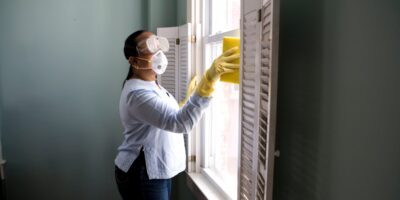
Strong odors, sprays and volatile chemicals can provoke symptoms in some people. “Natural,” “green” or scented does not guarantee that a product will be tolerated. Start with the least hazardous product that can do the job, follow the label, avoid mixing chemicals and use exhaust ventilation when outdoor conditions permit.
Prefer unscented products when fragrance is a known problem. Apply liquids to a cloth rather than spraying them into room air when the label permits. Keep containers closed and store them safely away from occupied living areas. Never mix bleach with ammonia, acids or other cleaners.
10. Track patterns and build an asthma action plan
Indoor-air changes support asthma management; they do not replace prescribed medication. The National Heart, Lung, and Blood Institute recommends a written asthma action plan created with a healthcare provider. It should identify triggers, daily medicines, how to recognize worsening symptoms, what medicine to use, when to call the provider and when to seek emergency care.
A simple diary can record symptoms, location, time, activity, cooking, cleaning, pet exposure, indoor humidity, outdoor AQI and medication use. Bring the record to the clinician. Do not use a consumer air-quality monitor to diagnose asthma or decide independently to change medication.
Download the NHLBI asthma action plan and complete it with the treating healthcare professional.
A practical first-week plan
- Make the home and car completely smoke-free.
- Measure bedroom and bathroom humidity for several days.
- Inspect for leaks, condensation, visible mold and musty odors.
- Encase the mattress and pillows if dust mites are a known or suspected trigger.
- Move pets out of the bedroom.
- Check range-hood and bathroom-exhaust operation.
- Review HVAC and portable-filter fit, sizing and replacement condition.
- Remove or substitute a strongly scented spray or cleaner if it correlates with symptoms.
- Check AirNow before opening windows during smoke or high-pollution periods.
- Schedule a healthcare visit to review trigger patterns and the written action plan.
Bottom line
The most effective indoor asthma strategy is layered: medical management plus source control, moisture control, targeted cleaning, smoke avoidance, safe ventilation and correctly selected filtration. Start with the exposures that match the person’s symptoms instead of buying multiple gadgets. Keep humidity near 30–50%, fix water problems, protect the sleeping area, avoid ozone-generating cleaners and prepare before wildfire season. Most importantly, make these environmental steps part of—not a substitute for—a clinician-guided asthma action plan.



Stay in the loop
Get the latest northwestcleanair.com updates delivered to your inbox.