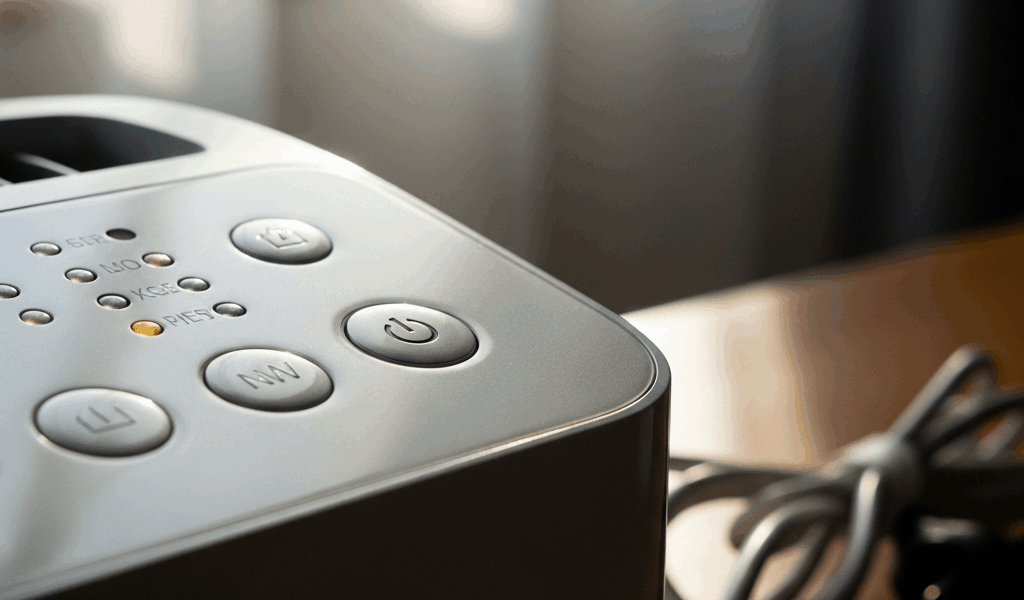
Why Your Air Purifier Won’t Turn On — and How to Actually Fix It
Air purifier troubleshooting has gotten complicated with all the conflicting advice flying around. As someone who spent 45 minutes convinced my Levoit Core 300 was completely dead before realizing the outlet was the problem the whole time, I learned everything there is to know about why these units refuse to power on. Today, I will share it all with you.
Here’s the thing most guides skip: order matters. Test the wrong things first and you’ll end up on hold with customer support describing a problem that a flipped breaker could’ve fixed in 30 seconds. Walk through these checks in sequence. You’ll either get the unit running or walk away knowing exactly what’s wrong — which is genuinely more valuable than guessing.
Check the Power Source Before Anything Else
Probably should have opened with this section, honestly. Dead outlets cause more “broken” air purifiers than any actual defect. Not a loose wire inside the unit. Not a failed motor. A dead outlet. It’s unglamorous and it’s almost always the answer.
Start here.
Unplug the air purifier. Grab a lamp — something with an obvious indicator — and plug it into the exact same outlet. Does it light up? If yes, the outlet’s fine and you can skip ahead. If no, you’ve already found your problem.
Dead outlets usually trace back to one of three things:
- A wall switch somewhere nearby that’s currently off
- A tripped circuit breaker in your electrical panel
- A surge protector that’s been switched off or has its internal protection engaged
The wall switch one is obvious. Check the wall behind the unit. Flip it.
For a tripped breaker, walk to your electrical panel and look for any switch sitting in that middle no-man’s-land position — not fully up, not fully down. Flip it back up firmly. Power surges sometimes trip several breakers at once, so scan the whole panel, not just one section. Then plug the purifier back in.
Surge protectors are sneakier. I’m apparently sensitive to this one — my APC surge protector clicked off silently after a storm and I had zero idea for two days. Nothing trips visibly. The unit just stops passing power. Plug the air purifier directly into a wall outlet instead and see if it responds. That rules out the surge protector immediately. Don’t make my mistake of staring at the surge protector for five minutes looking for a visible sign that something’s wrong.
Also run your hand along the power cord from plug to unit. Feel for pinch points, crushed sections near furniture legs, anything that looks chewed or frayed. Plug it into a different outlet — one you already confirmed works with that lamp test — and try again.
This single step fixes the problem more often than feels reasonable. We just don’t think to test the outlet because we assume it works.
Look for a Locked Control Panel or Child Lock
But what is a child lock on an air purifier? In essence, it’s a panel freeze — every button stops responding, nothing powers on, nothing blinks except maybe a faint acknowledgment flash when you press something. But it’s much more than an inconvenience. It’s genuinely indistinguishable from a dead unit if you don’t know to look for it.
Frustrated by a completely unresponsive panel and three separate outlet tests, I once spent 40 minutes convinced my Levoit had failed internally — only to find the child lock had engaged on its own during shipping. No lights. No fan. Just silence. The power button pressed like normal and did absolutely nothing. That’s what makes this particular issue so maddening to people who don’t know about it.
Some air purifiers ship with the lock already active. Some people trigger it accidentally by holding the power button too long. You’ll know it’s the issue when the outlet tests fine, the cord looks fine, and pressing the power button produces either nothing or a tiny beep — the unit acknowledging input but refusing to act on it.
Unlocking it depends on the model. Most want you to hold the power button for 5 to 10 seconds. Others need two buttons pressed simultaneously. A handful of models hide a dedicated lock button on the back panel — Winix does this on a couple of their units, and it drives people insane. Check your manual. If you’ve lost it, search “[brand] [model number] child lock” and you’ll find the exact sequence in about 90 seconds. This fixes the problem completely when a lock is the cause.
A Dirty or Improperly Seated Filter Can Prevent Startup
Some air purifiers won’t run if the filter is missing, badly clogged, or not seated correctly after a replacement. It’s an intentional design choice — the unit detects the problem and refuses to start the motor rather than run it in a state that causes damage. That said, it’s also what cost me an hour of confusion after I swapped out a filter on my Blueair 211+ and couldn’t figure out why it wouldn’t restart.
Open the unit. Look at the filter. Is it seated flat against the housing with no gaps along the edges? A filter sitting even a few millimeters crooked can trigger the safety shutoff on some models. Push it back into the frame firmly — you should feel it seat fully or hear a faint click.
While you’re in there, look at the filter condition itself. If it’s been six months or longer since the last change, replace it. A HEPA filter clogged with $40 worth of pet hair and household dust creates back-pressure the motor can’t push through, and certain units detect this and won’t start. Generic replacement filters for most models run $15–$25 on Amazon and work fine — you don’t need the branded version at twice the price.
After reseating or replacing the filter and closing everything back up, look for a reset button on the control panel. It might say “Reset,” “Filter,” or just show a small icon that looks like a circular arrow. Press it once and hold for about 3 seconds. Then try powering on normally. Some units absolutely require this step after any filter service — skip it and the unit behaves as if nothing changed.
Overheating Protection May Have Shut the Unit Down
Air purifiers have thermal shutoff sensors built in. When the internal temperature climbs past a safe point, the unit cuts power automatically — no warning, no error code on most models, just off. That’s a feature, not a flaw. It’s what prevents electrical fires. But it’s also easy to trigger without realizing it.
Where is the unit sitting right now? Check for a tight corner with walls on two or three sides, a heating vent blowing warm air nearby, a space heater within a few feet, or direct afternoon sunlight hitting the intake. Any of these can push internal temps past the shutoff threshold — especially in a room that’s already warm. Six inches of clearance on all sides is the general rule, and most people ignore it.
Move the air purifier to an open area away from heat sources. Unplug it and leave it alone for 15 to 20 minutes — not five minutes, actually 15 to 20. Let the internals cool down completely. Then plug back in and try again. If overheating was the trigger, the unit should restart normally.
Worth noting: if it restarts fine but shuts off again after 30 minutes in the same spot, the location is the ongoing problem. Find a permanent placement that doesn’t choke the airflow or bake the unit.
When to Stop Troubleshooting and Contact Support
If you’ve worked through all four of these sections and the unit still won’t power on, stop. You’ve done what you can without voiding a warranty or making things worse. Contact the manufacturer.
Stop troubleshooting immediately if:
- No lights appear at all after a full power cycle and breaker reset
- There’s any burning smell, melting plastic odor, or anything acrid coming from the unit
- The power cord shows visible damage — fraying, cuts, crush marks
- The unit was dropped, got wet, or took any physical impact recently
Before you call, grab the model number off the back or bottom of the unit, your purchase date, and a receipt or order confirmation if you have one. Then describe specifically what you tested and what happened — or didn’t happen — at each step. Most air purifiers carry a 1 to 2 year manufacturer warranty covering defects, and if yours falls within that window, repair or replacement at no cost is genuinely likely. That’s what the warranty exists for.
You’ve done the work. Hand it off.



Stay in the loop
Get the latest northwestcleanair.com updates delivered to your inbox.