What That Musty Smell Actually Means
Air purifier maintenance has gotten complicated with all the conflicting advice flying around. But here’s the thing nobody says plainly: if your filter smells musty after washing, you have mold. Not dust. Not some factory odor burning off. Actual fungal growth — either inside the filter material itself or in the housing around it.
As someone who made this exact mistake two years ago, I learned everything there is to know about musty filters the hard way. I washed my pre-filter, left it sitting damp in a hallway closet for maybe three hours, reinstalled it, and by day four the whole room smelled like a flooded basement. I genuinely assumed the purifier had died. Today, I will share it all with you — so you don’t burn two weeks and $40 figuring it out yourself.
Moisture got trapped somewhere it shouldn’t have. That’s the whole story. Filter media is dense — seriously dense — and water enters easily but escapes slowly. Seal that dampness inside a dark, warm environment and mold colonies establish themselves fast. A week. Sometimes less. I’ve seen it happen in four days.
This is different from a burning smell, which is normal on a brand-new unit. That’s activated carbon off-gassing. It clears within an hour or two. Musty is fungal. It gets worse the longer the filter sits wet, not better. Big difference.
The Most Common Reason This Happens
Two mistakes cause this problem almost exclusively.
Mistake one: washing a HEPA or carbon filter that was never meant to get wet. Most HEPA filters — and essentially all activated carbon filters — are single-use by design. They trap particles and gases permanently inside their internal media. Water enters the fiberglass or carbon matrix and doesn’t leave the same way it came in. The filter might feel dry on the outside within a few hours while the interior stays damp for days. That wet interior is where mold takes hold.
Check your filter’s label right now. If it says “do not wash” or “disposable” and you’ve already washed it, that’s your culprit. Rinsing it again won’t fix anything.
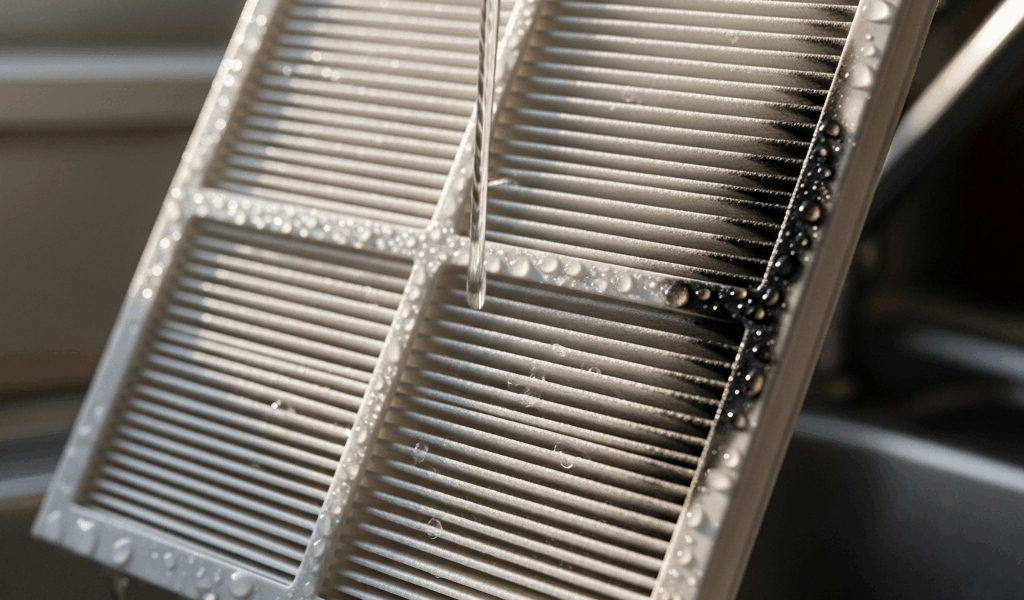
Mistake two: washing a pre-filter correctly but drying it wrong. Pre-filters — usually foam or mesh — are genuinely washable. That’s literally their purpose. The wash isn’t the problem. The dry is.
Most people hang a wet pre-filter in the bathroom for two or three hours. Maybe overnight if they remember. That’s not enough. These filters are thicker than they look. Surface drying means almost nothing when interior moisture is still sitting there.
Probably should have opened with this section, honestly. The drying time is the whole answer: 24 to 48 hours in a well-ventilated area. Not the kitchen counter. Not a closet. Not a bathroom where humidity is trapped. A dry room with actual airflow — ideally a fan pointed directly at the filter — and patience.
How to Tell If the Filter Can Be Saved
Run through this checklist before you do anything else.
- How long ago did you wash it? Less than a week with no visible growth — recovery is possible. Been sitting damp for weeks? The mold is deep and established.
- Does the smell intensify when the unit runs? Yes means air is pushing through active mold colonies. That’s what you’re smelling.
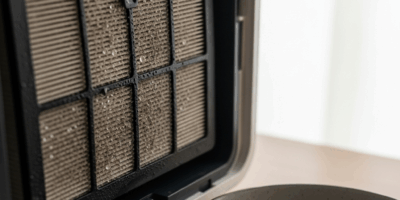
- Look at the actual filter material. Any dark spots, discoloration, visible growth? That’s active mold. It can’t be saved.
- What type of filter is it? HEPA or activated carbon that got wet isn’t recoverable. Full stop. Replace it.
But what is a washable pre-filter? In essence, it’s a coarse outer layer — foam, mesh, or plastic frame — designed specifically to handle water. But it’s much more than that. It’s your HEPA filter’s first line of defense, catching larger particles before they ever reach the expensive media underneath.
If yours is a HEPA or carbon type that made contact with water, be direct with yourself: it needs replacement. Drying it won’t restore structural integrity. And if water reached activated carbon, it’s no longer filtering gases at all. Don’t make my mistake of reinstalling it and hoping for the best.
Step-by-Step Fix for a Musty Pre-Filter
So, without further ado, let’s dive in.
- Remove the filter from the unit immediately. Don’t run the purifier with a damp filter installed — you’re just circulating mold spores through your room at that point.
- Rinse with cool water. Hold it under a faucet or use a gentle spray setting. Cool water only — not hot. Hot water degrades foam pre-filters faster than you’d expect. Most pre-filters don’t need soap. If your manual specifically approves it, use unscented dish soap and rinse thoroughly afterward.
- Shake out excess water gently. Don’t wring it. Wringing damages the foam structure. Gentle shaking removes what gravity can pull free.
- Lay it flat or hang it vertically somewhere with real airflow. A spare bedroom with a window cracked open works. An unfinished basement with a box fan running works better. Hang it if possible — gravity helps. This step is non-negotiable: 24 to 48 hours minimum. Set a calendar reminder. Not guessing.
- Point a fan directly at it. A $25 box fan or a pedestal fan aimed straight at the filter dramatically cuts drying time — sometimes down to 12 to 18 hours if airflow is strong enough. Air movement is everything here.
- Smell test before reinstalling. Bring it close to your nose. Any mustiness at all? Back it goes for another 12 hours. Smells fresh and clean? Safe to reinstall.
While the pre-filter dries, you can run your purifier with just the main HEPA installed. You’ll still get real filtration — HEPA is the primary barrier anyway. The pre-filter just extends its lifespan by catching larger particles first. Running without it for a day or two is genuinely fine.
When You Need to Replace the Filter Instead
Stop trying to save it if any of these apply.
- The filter is labeled “non-washable,” “disposable,” or “do not wet” — and it got soaked anyway.
- Actual mold or mildew is visible on the material. Dark spots that don’t wipe away cleanly. That’s not recoverable.
- The musty smell persists after a full 48-hour dry cycle with consistent airflow.
- The filter has been sitting damp for more than two weeks.
Finding a replacement is easier than it sounds. Locate your unit’s model number — usually on a sticker on the bottom or back panel. Search “[Model Number] replacement filter” and you’ll find OEM options alongside third-party alternatives. I’m apparently a Coway AP-1512HH person and the official Coway filters work for me while generic knockoffs never quite seal correctly. Your mileage will vary.
That said — one reassurance worth stating plainly. Your actual air purifier unit is almost certainly fine. This is a filter problem, not a device failure. Swap the filter and you’re back to normal. That was probably $20 to $50, not $150.


Stay in the loop
Get the latest northwestcleanair.com updates delivered to your inbox.