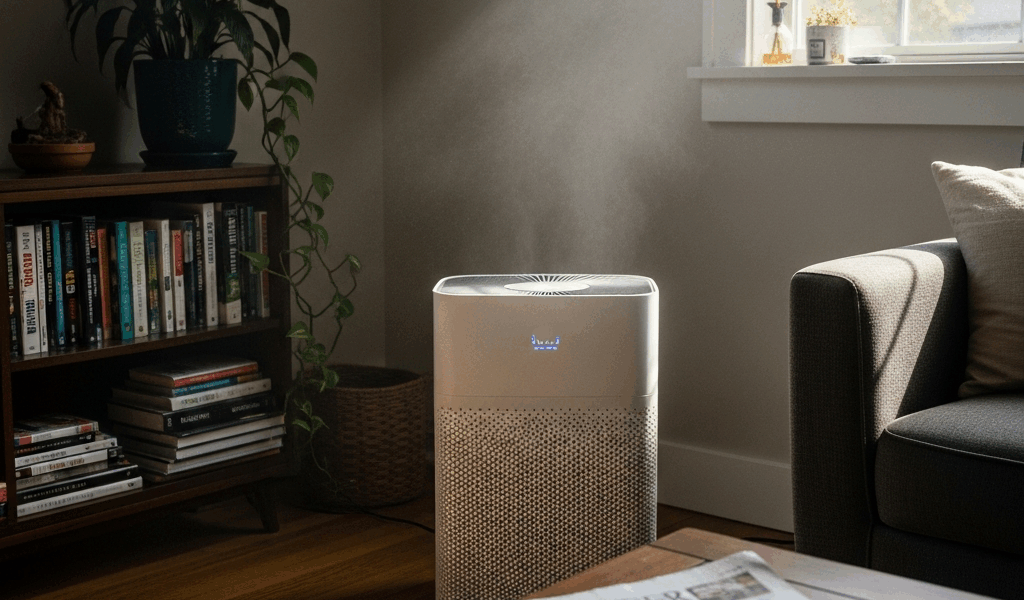
Best Air Purifier for Wildfire Smoke — PNW Guide
Finding the best air purifier for wildfire smoke in the Pacific Northwest is a genuinely different problem than buying one for, say, Phoenix or Los Angeles. I grew up in the Willamette Valley, spent three summers watching the Cascades disappear behind a brown curtain, and made some expensive mistakes along the way before I figured out what actually works here. The conditions we deal with in western Oregon and Washington are specific enough that most national review sites leave you with half the picture. This guide is for people living with smoke season as an ongoing reality, not a once-a-decade event.
Why PNW Smoke Season Is Different
Most air purifier reviews are written with the assumption that you need clean air for a day, maybe two. You run the machine hard, the smoke clears, you go back to normal. That is not the Pacific Northwest experience anymore.
We are averaging 15 or more smoke days per year across the region, and that number has been climbing. The 2020 season was genuinely shocking — Portland and Seattle both recorded the worst air quality of any major city on Earth for several days running. But the quieter reality is the slow grind of a three-week smoke event where the AQI bounces between 80 and 160, never bad enough to make the national news, just bad enough to make you feel vaguely terrible and give your kids persistent coughs.
Running a purifier through that kind of event does two specific things to your planning that a single-day spike doesn’t. First, your filters accumulate particulate load at a rate most manufacturer schedules don’t account for. A filter rated for six months under normal conditions can be genuinely spent after a bad smoke season here. I learned this the hard way after my second summer with a mid-range unit — kept thinking the air smelled off, finally pulled the filter, and it was visibly gray and clogged. Not ideal.
Second — and this one took me longer to understand — western Washington and Oregon have high ambient humidity. We’re talking 70–85% relative humidity through much of September, which is also peak smoke month. Humidity causes fine smoke particles to swell and clump, which actually helps some filter types capture them more effectively. But it also means your filter media can absorb moisture and become a hospitable surface for mold if airflow is reduced. Units with good airflow engineering handle this better than ones optimized purely for dry-climate particle capture.
The interaction between PM2.5 smoke particles and humid air also matters for sensor accuracy. Several popular purifiers use optical particle counters that read elevated when there’s moisture in the air, triggering constant high-speed fan cycles that aren’t always necessary. That runs up your electricity bill and chews through filters faster. Something to factor in when you’re choosing a unit for a marine-climate home.
Top 3 Purifiers for PNW Smoke by Room Size
Probably should have opened with this section, honestly. Here’s what I actually recommend based on room size and budget, with the specifics you need to make a real decision.
Large Rooms — IQAir HealthPro Plus
For rooms above 500 square feet — an open-plan living and kitchen area, a large master bedroom, a basement family room — the IQAir HealthPro Plus is the machine I trust. It uses a HyperHEPA filter rated to capture particles down to 0.003 microns with 99.5% efficiency. Standard HEPA captures down to 0.3 microns. The difference matters for wildfire smoke, which produces an enormous proportion of ultrafine particles well below the standard HEPA threshold.
The HealthPro Plus retails around $899. That’s a lot of money. The replacement filter kit — the PreMax, V5-Cell gas-and-odor filter, and HyperHEPA combined — runs about $249 and needs replacement every 12 to 18 months under heavy smoke use. The unit covers up to 1,125 square feet at a moderate fan speed and handles a standard PNW two-story home’s main floor without breaking a sweat. It also doesn’t have a humidity-sensitive optical sensor, which matters here. The fan control is manual, not auto-reactive, so you set it and it stays there.
The noise level at setting 3 of 6 is around 45 dB — noticeable but not disruptive. At setting 6 it’s 67 dB and sounds like a small jet engine. I keep mine on 4 during smoke events, which lands around 52 dB and genuinely cleans the air in my 620-square-foot open kitchen and living room within about 90 minutes of a door being opened.
Mid-Size Rooms and Value Pick — Blueair Blue Pure 211+
For rooms between 250 and 500 square feet, the Blueair Blue Pure 211+ is the best balance of performance and cost I’ve found. It runs about $299 and uses a combination of mechanical filtration and electrostatic charge to capture particles. Its CADR rating — Clean Air Delivery Rate — is 350 for dust and 350 for smoke, which is strong for the price tier.
The filter replacement cycle is every six months under normal conditions, which in PNW smoke season realistically means once per year if you’re running it during smoke events only, or twice a year if you run it year-round. Replacement filters are about $50. The pre-filter fabric sleeve, which costs around $20 and catches larger particles before they hit the main filter, can extend filter life meaningfully — swap it out mid-season and your main filter lasts longer.
One honest drawback: the 211+ has an auto mode that uses an optical sensor, and in humid conditions it can run unnecessarily fast. I just leave mine on speed 2 during smoke events rather than auto and that solves it entirely.
Bedrooms — Coway AP-1512HH Mighty
The Coway AP-1512HH Mighty is what I put in bedrooms and offices. It’s a 360-square-foot unit that retails around $99 to $130 depending on where you buy it. Four-stage filtration: pre-filter, activated carbon filter, true HEPA, and an ionizer (which you can disable — I do). Its CADR for smoke is 246, which is more than adequate for a typical PNW bedroom of 150 to 250 square feet.
The filter replacement cost is about $25 for the HEPA filter, and under smoke season use I find I’m replacing it once a year rather than the manufacturer’s suggested every six months. The unit is quiet — 24 dB on its lowest setting, which you won’t hear over a ceiling fan. Sleep mode dims the display, which matters in a dark bedroom.
Forced by three consecutive nights of AQI over 150 with a child who kept waking up coughing, I put one of these in her room and the difference was measurable within a day. That’s not a controlled study. That’s just what happened.
The Corsi-Rosenthal Box — $40 DIY That Works
Before you spend $300 or $900, hear me out on this. The Corsi-Rosenthal Box is a DIY air purifier developed by Richard Corsi, an air quality engineer who was Dean of Engineering at UC Davis, and Jim Rosenthal, a filter manufacturer. University of Washington researchers tested it during the 2020 wildfire events and published findings showing a 90% reduction in fine particle concentration in rooms using these devices. Ninety percent. That’s not marketing copy. That’s peer-reviewed research.
The build is simple. You take four MERV-13 rated 20×20-inch furnace filters — around $8 to $12 each from any hardware store — and tape them into a cube around a standard box fan with the airflow facing inward on all four sides, then tape a fifth filter or a piece of cardboard across the top. Total cost: roughly $40 to $60 depending on the fan you use. A 20-inch box fan runs about $25 at Fred Meyer or Home Depot.
The UW research is publicly available and the box fan filtration project has a guide at cleanaircrew.org. What makes this relevant specifically to PNW conditions is that MERV-13 filters handle the humidity interaction reasonably well, and at $40 you can build several of them and cover multiple rooms simultaneously — which is genuinely the right strategy during a multi-week event when you can’t afford to outfit every room with a $900 unit.
The Corsi-Rosenthal Box is louder than a dedicated unit. The box fan at high speed is about 55 dB, roughly equivalent to the sound of a normal conversation. It’s not silent bedroom equipment. It works best in larger common areas where you want to clean a significant volume of air quickly and don’t need whisper-quiet operation.
MERV-13 is the minimum rating you want for smoke. MERV-8 and MERV-11 filters — the ones often sold for this purpose at dollar stores or discount bins — will not effectively capture PM2.5. The filter packaging will list the MERV rating. Don’t guess. Check the number.
Running Costs Through a 3-Week Smoke Event
A three-week smoke event is now a realistic planning scenario for PNW residents. Not a worst case. A scenario. Here’s what each option actually costs to run through 21 days of continuous operation, because the purchase price is only part of the picture.
IQAir HealthPro Plus
Power consumption: 215 watts at maximum fan, around 110 watts at setting 4. Running 24 hours a day at setting 4 for 21 days: approximately 55 kilowatt-hours. At the current Pacific Power and Seattle City Light rates of roughly $0.11 to $0.14 per kWh, that’s about $6 to $8 in electricity. Filter degradation over a three-week event at heavy use represents roughly 20% of a filter set’s lifespan, so approximately $50 of filter cost amortized. Total 3-week cost estimate: $56 to $58.
Blueair Blue Pure 211+
Power consumption: 61 watts maximum, around 30 watts on medium. Three weeks at medium, 24 hours a day: about 15 kWh, or $1.65 to $2.10 in electricity. Filter degradation: a three-week event is significant for this unit — closer to 30% of filter life, about $15 amortized. Total: approximately $17 to $18. Excellent value for the performance level.
Coway Mighty AP-1512HH
Power at speed 2: about 17 watts. Three weeks continuous: roughly 8.5 kWh, under $1.20 in electricity. Filter degradation: roughly 15% of annual filter life, about $4 amortized. Total: under $6 for three weeks. This is the cheapest ongoing cost of anything on this list, which helps justify placing one in every bedroom.
Corsi-Rosenthal Box
A standard 20-inch box fan draws about 100 watts on high. Three weeks on high: approximately 50 kWh, or $5.50 to $7.00. Four MERV-13 filters will be noticeably loaded after a three-week event and should be replaced — that’s $32 to $48 for a new set. Total cost for the event: roughly $37 to $55, at which point you’re in the cost territory of the commercial units but with better room coverage if you’ve built multiple boxes.
The right strategy for most PNW households is layered. One high-performance unit like the IQAir or a 211+ in the main living area. Coway Mighty units in bedrooms. A Corsi-Rosenthal Box or two in supplementary spaces or to loan to a neighbor who doesn’t have anything. Filter stock bought in advance in September when hardware stores often run out. That last point is real — during bad smoke events, MERV-13 filters sell out locally within days. Buy them before the season.
Smoke season in the Pacific Northwest has changed. It is not a temporary problem. The investments you make in clean indoor air are durable, recurring value, and the cost math over several years of smoke events makes even the $900 IQAir look reasonable. Buy what you can. Build what you can’t afford. But don’t let another September catch you without something running.

Stay in the loop
Get the latest northwestcleanair.com updates delivered to your inbox.