When Smoke Season Hits the Pacific Northwest
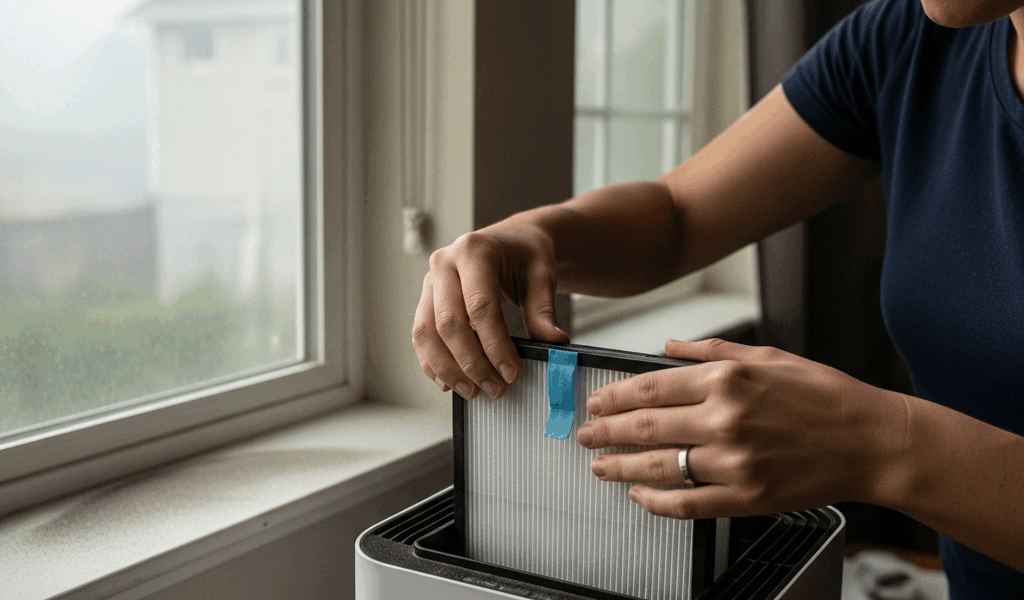
Wildfire smoke and indoor air quality have gotten complicated with all the bad summers flying around — and honestly, I’ve been thinking about this every July for over a decade, usually while standing at my kitchen window watching the Cascades vanish behind a wall of brown haze. I’ve lived outside Portland for eleven years. In that time, smoke season has gone from a once-in-a-while nuisance to something I prep for the way my grandmother prepped for winter — deliberately, early, and with a running list stuck to the refrigerator.
The Pacific Northwest smoke season typically runs July through October, though bad years push that into late June. That window tracks with fire conditions in eastern Oregon, eastern Washington, and increasingly, northern California and British Columbia. When those regions burn — and they burn every single year now — smoke funnels west through river corridors and mountain passes, settling into valleys where people actually live. Portland. Seattle. Eugene. The Willamette Valley. All of it collects smoke like a bowl left out in the rain.
The Air Quality Index is the number you need to know. Here’s how to actually read it:
- 0–50 (Good) — Normal outdoor activity, no restrictions
- 51–100 (Moderate) — Sensitive individuals should start paying attention
- 101–150 (Unhealthy for Sensitive Groups) — Children, elderly, and anyone with asthma or heart conditions should stay inside
- 151–200 (Unhealthy) — Everyone should stay inside and limit exertion
- 201+ (Very Unhealthy / Hazardous) — Stay inside. Full stop.
To check your local AQI, the most reliable tools are AirNow.gov (run by the EPA), the PurpleAir map — which uses community sensors and often updates faster than government monitoring stations — and the Washington Smoke Blog or Oregon DEQ pages during active events. I check all three, because they sometimes disagree. The PurpleAir sensors near my neighborhood have caught spikes that the nearest official monitor, about six miles away, missed entirely for a couple of hours.
Don’t make my mistake: waiting until the AQI hits 150 to start taking action. By then you’ve already been breathing smoke for hours, your house has already accumulated particulates, and now you’re scrambling to find the air purifier you shoved in a closet last November. Prep happens before the smoke arrives — not during it.
Seal Your Home Before the Smoke Arrives
Probably should have opened with this section, honestly, because sealing your home is the cheapest and most overlooked part of smoke defense. Running a $400 air purifier in a house full of gaps is like bailing out a boat without plugging the hole first.
The goal during a smoke event is switching your home from “ventilating” mode to “sealed” mode. That shift involves a few concrete steps.
Windows and Doors
Close everything — obvious, but worth saying out loud, because a lot of people leave bathroom windows cracked or forget about that kitchen sink window that’s been painted open for a decade. Walk every room. Close every window. Check every exterior door for gaps at the threshold.
For temporary sealing, foam weatherstripping tape from any hardware store works fine. The 3M brand, self-adhesive foam, comes in a pack for around $6–$8 and peels off cleanly at the end of season. I use it around two particularly drafty casement windows on the north side of our house — the frames have warped slightly over the years. You press it into the gap between sash and frame, close the window on it, and the compression creates a decent seal. Not airtight. Good enough.
Door sweeps matter too, especially in homes with older exterior doors. A draft snake along the bottom threshold is a low-tech fix that costs nothing if you have a rolled towel lying around.
Your HVAC System
Switch your thermostat fan setting from “Auto” to “On.” This keeps air circulating through your filter continuously rather than only when heating or cooling kicks in. More airflow through the filter means more particulates captured per hour — simple math.
Then check your filter. This is the single most important mechanical step. You want a filter rated MERV-13 or higher. But what is MERV? In essence, it’s a scale from 1 to 16 measuring how well a filter captures small particles. But it’s much more than that when smoke season rolls around. Wildfire smoke particles are extremely fine — mostly PM2.5, meaning 2.5 microns or smaller — and the standard MERV-8 filter that came stock with your system captures very little of them. MERV-13 captures around 85–90% of particles in the 1–3 micron range. That’s a meaningful difference.
Nordic Pure and Filtrete both make MERV-13 filters in standard sizes. A Filtrete 1500 — their MERV-12 equivalent, marketed as “MPR 1500” — runs about $18–$22 for a 16x25x1 size. If your system can handle a 4-inch thick filter, the extra media depth captures even more without restricting airflow as much.
One critical note: make sure your HVAC is set to recirculate, not to pull outside air. Some systems, particularly in older homes with whole-house ventilation, have a fresh air intake damper. Close it during smoke events. Apparently a lot of homeowners don’t even know theirs exists.
Air Purifiers That Actually Work for Smoke
Frustrated by an AQI of 465 — I still have the screenshot somewhere — I panic-bought two air purifiers at a Fred Meyer during the 2020 smoke event, grabbing whatever was left on the shelves. One of them was a cheap ionic purifier that turned out to be nearly useless for smoke. Lesson learned the hard way, in a house that smelled like a campfire for two weeks straight.
Here’s what actually matters when choosing a purifier for wildfire smoke.
HEPA Is Non-Negotiable
True HEPA filters capture 99.97% of particles 0.3 microns and larger. For smoke — primarily PM2.5 and smaller — HEPA is the minimum standard. “HEPA-type” or “HEPA-style” are marketing phrases for filters that don’t meet that standard. Avoid them. Look for “True HEPA” specifically, or a filter certification on the box.
Activated carbon is a bonus for smoke events — not just for particulates, but because smoke carries VOCs and odor compounds that HEPA alone doesn’t touch. A purifier with a substantial activated carbon layer, not just a thin mesh of carbon-impregnated fabric, handles both the particles and the chemical side of smoke. That’s what makes a dual-stage purifier worth the extra cost to those of us dealing with weeks of smoke at a stretch.
CADR and Room Size Matching
CADR stands for Clean Air Delivery Rate, measured in cubic feet per minute — it tells you how quickly a purifier cleans a given volume of air. For smoke specifically, look at the “smoke” CADR rating on the box. Not the dust or pollen number, which is different.
A general rule is matching the CADR to your room size so the purifier completes at least 4–5 air changes per hour. For a 250-square-foot room with 8-foot ceilings — 2,000 cubic feet total — you want a smoke CADR of at least 130–165 CFM. Most manufacturers include a room size recommendation. Trust the one labeled for smoke, and if you’re choosing between two sizes, go bigger.
Specific units worth looking at:
- Coway AP-1512HH (Mighty) — CADR of 246 for smoke, covers rooms up to around 360 sq ft, typically $100–$120. Reliable, widely available, replacement filters are easy to find.
- Winix 5500-2 — CADR of 243, covers up to 360 sq ft, includes a washable pre-filter and a PlasmaWave feature that can be switched off if you prefer. Usually $150–$180.
- Blueair Blue Pure 211+ — CADR of 350, covers up to 550 sq ft, better choice for larger living rooms or open floor plans. Around $200–$250.
The DIY Corsi-Rosenthal Box
If you need coverage fast or you’re on a tight budget, the Corsi-Rosenthal box is genuinely effective and costs about $60–$80 to build. Named after engineers Richard Corsi and Jim Rosenthal, it’s a cube made from four 20×20 MERV-13 furnace filters taped together on the sides, with a box fan on top blowing air outward. The filters pull air inward through all four sides, push it through the MERV-13 media, and exhaust it clean from the top.
Parts list for a standard build:
- Four 20x20x1 MERV-13 filters (~$10–$12 each, Nordic Pure or Filtrete)
- One 20-inch box fan (Lasko or similar, $25–$35)
- Duct tape or foil HVAC tape
- Cardboard for the bottom panel (free)
Build time is about 20 minutes. Independent testing has shown it competes with commercial units costing $200 or more — which is probably why it took off several years after its initial design and eventually evolved into the go-to emergency solution that air quality enthusiasts know and recommend today. Run it on medium speed. High speed moves air too fast for optimal filtration and is loud enough to be genuinely annoying in a bedroom.
What Not to Do During Smoke Events
This section is where I see even well-intentioned people undermine everything they’ve done to protect their indoor air. A few of these tripped up people I know personally — one of them a neighbor who runs an air purifier religiously but kept her window AC unit going all through a 180 AQI day.
Window AC Units
Do not run a window air conditioner during high-smoke days. Window units pull outside air in by design — that’s not a bug, it’s how they work. During a smoke event, running a window AC is effectively pumping smoke-laden outdoor air directly into your living room. Central air with a recirculating HVAC system is the right call instead. If you don’t have that option, fans and minimizing heat-generating activity beat a window unit during any AQI spike above 150.
Indoor Combustion Sources
Your indoor air quality can get worse than the outdoor air if you add internal pollution sources during an already-compromised situation. That means:
- No gas stove cooking — Gas burners produce nitrogen dioxide and particulate matter. Use a microwave, electric pressure cooker, or electric skillet instead. If you must use the gas range, run the hood vent on recirculate mode if it has one — not exhaust to outside.
- No candles — Open flames produce PM2.5 and soot. A scented candle lit to cover the smoke smell actually makes the air measurably worse.
- No incense — Same reason. Incense smoke contains fine particles and VOCs at concentrations that rival outdoor air during moderate smoke events.
- No wood-burning fireplace or fire pit — Obviously.
Cloth Masks and Surgical Masks Are Not Smoke Protection
This one matters more than people realize. A cloth mask or a blue surgical mask does not filter PM2.5 particles — the electrostatic filtration and tight facial seal required to capture fine particles simply isn’t present in either. If you’re outside during a smoke event, or need to briefly open the house, an N95 or KN95 respirator is what provides actual protection. The 3M Aura 9205+ N95 might be the best option, as smoke exposure requires a certified tight seal and consistent filtration. That is because the fit matters as much as the filter material — loose edges defeat the whole purpose. A box of 20 runs about $25–$30 and they fold flat for a glove box or coat pocket. A KN95 from a reputable supplier is also acceptable, though generic imports are hit or miss.
Beards break the seal, worth noting. If facial hair is a factor, a powered air-purifying respirator is the alternative — though that’s more industrial than most homeowners need for brief outdoor exposure.
Assuming the Smell Means Nothing Has Changed
Your nose adapts. After a few hours in smoky conditions — even at elevated PM2.5 levels — many people stop noticing the smell and assume the air has cleared. It hasn’t. Olfactory fatigue is real and genuinely misleading. Keep checking AQI. Don’t let your nose make the call.
First, you should assemble a smoke season kit and store it somewhere accessible — at least if you live anywhere in the Pacific Northwest. Mine lives in a plastic bin in the hall closet: replacement HEPA filters, a box of N95s, a roll of foam weatherstripping tape, and a printed AQI threshold chart for anyone house-sitting. Putting it together in August, before the smoke arrives, takes about 20 minutes and costs less than $75 total. That’s significantly cheaper — and far less stressful — than scrambling for a purifier when every store within thirty miles has sold out and the AQI is already at 180.
Smoke season is coming. It always does now. The preparation is the part you actually control.
People with asthma need a broader year-round plan in addition to smoke preparation. See our indoor asthma trigger guide.

Stay in the loop
Get the latest northwestcleanair.com updates delivered to your inbox.