Seattle Wildfire Smoke Season — What to Expect
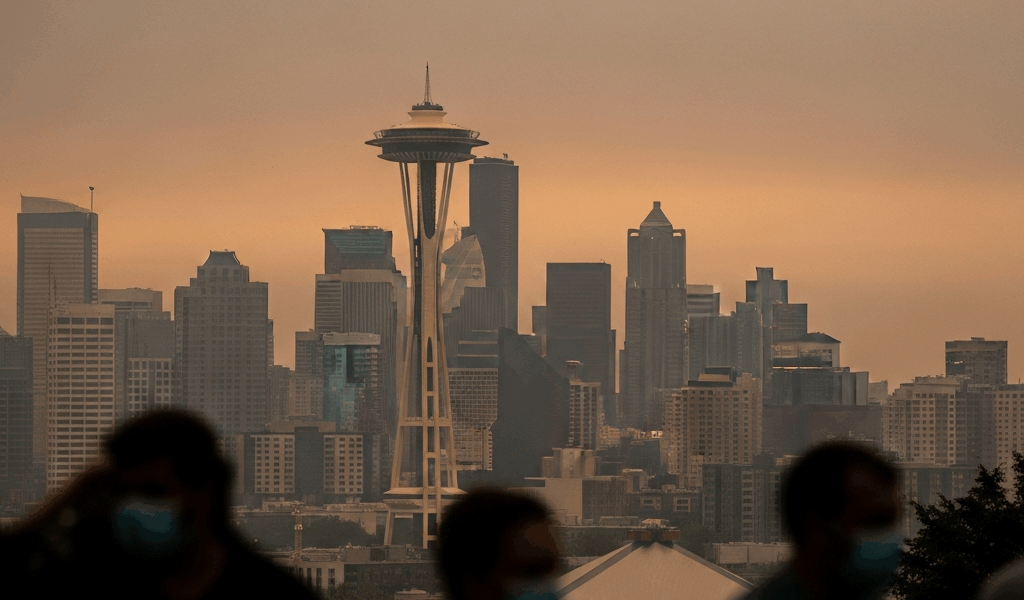
Seattle wildfire smoke season has gotten complicated with all the orange skies and hazard alerts flying around — and if you just moved to the Pacific Northwest, nothing really prepares you for standing in your backyard at noon watching the sun turn the color of a blood orange. As someone who’s lived in the Puget Sound region for over a decade, I learned everything there is to know about surviving smoke season the hard way. August 2018 was my reckoning — 24 days of unhealthy air, a porch I stopped using, and a growing suspicion that what used to be a minor summer nuisance had become something else entirely. This is the resident-level playbook I wish someone had handed me. Knowing the AQI number is one thing. Knowing what to actually do on a Wednesday morning when it hits 175 is something else.
When Smoke Season Hits Seattle — Historical Data
Smoke season in Seattle used to be a week-long inconvenience — a few hazy days, maybe a scratchy throat, then rain showed up and solved everything. That’s not the reality anymore. The shift happened gradually, then all at once. Before 2015, a bad smoke year meant maybe five or six days where the air felt a little thick. Since then? The region regularly logs 15 or more poor air quality days per summer. Put it on the calendar alongside tax season and school registration, because that’s the category it belongs in now.
The Puget Sound Clean Air Agency data tells the story without editorializing. 2018 was the benchmark year nobody wants to repeat — 24 days of degraded air, including a stretch in August where Seattle briefly ranked among the most polluted cities in the world. Not the country. The world. That got people’s attention in a way that years of climate projections hadn’t managed.
The smoke doesn’t actually start here. Most of what chokes Seattle summers blows in from wildfires burning in eastern Washington, Oregon, and increasingly from Northern California and British Columbia. Wind patterns and the Cascades create a kind of funnel — trapping smoke in the lowlands around Puget Sound. On the worst days, you can drive 20 minutes east toward Issaquah, gain some elevation, and watch the entire metro area sitting under a brown lid. It’s unsettling every single time.
Here’s what the calendar actually looks like based on recent years:
- July: Occasional smoke events, usually brief. Watch for early-season fires in eastern Washington — they can send smoke west faster than most people expect.
- August: Peak risk. Dry conditions, high fire activity, and regional wind patterns converge. This is the month most likely to produce multi-day smoke events.
- September: Still active. Some of the region’s worst episodes arrive in early September when late-season fires push smoke westward across the Cascades.
- October: Risk drops sharply after the first significant rain — which in Seattle typically arrives by mid-October, sometimes earlier.
Plan your outdoor events, garden projects, and anything involving sustained exertion around this window. Book indoor backup venues for late-August gatherings. Don’t make my mistake — I planned an outdoor birthday party for August 22nd twice before finally accepting that this is just how summers work now. The third year I reserved a pavilion with a retractable roof and felt very smart about it.
AQI Levels and What They Mean for Your Day
Probably should have opened with this section, honestly, because nothing else in this guide makes much sense without it. The Air Quality Index runs from 0 to 500. Here’s what those numbers actually mean on the ground in Seattle — not what a policy document says, but what you do differently on each kind of day.
Green — 0 to 50
Good air. Open every window in the house. Go run that five miles. Let the kids stay outside until dinner. These days feel genuinely precious during smoke season — use them fully, because you’ll be glad you did when things shift.
Yellow — 51 to 100
Moderate. Most people are fine and won’t notice anything. If you have asthma or tend to be sensitive, start paying closer attention. Windows can stay open for now, but check the forecast before committing to a long bike ride or outdoor project.
Orange — 101 to 150
This is where I close the windows — every one of them. Unhealthy for sensitive groups means kids, elderly residents, and anyone with respiratory conditions. If your household includes those people, transition to indoor air now. A 45-minute outdoor workout at this level is doing measurable harm to vulnerable lungs. Cancel the morning run. It’ll still be there when the air clears.
Red — 151 to 200
Unhealthy for everyone, full stop. Close all windows, run your air purifier, and stop outdoor exercise regardless of how good you feel or how fit you are. Your car’s recirculate setting becomes your commuting best friend. This is also the level where I text my neighbors with young kids — not everyone checks AQI before sending their seven-year-old out to play.
Purple — 201 to 300 — and Above
Very unhealthy to hazardous. Seattle hit this range during the worst days of 2018 and again in 2020. Kids stay inside, period. Adults minimize any outdoor exposure. An N95 mask is worth putting on just to walk to the car. The air has a visible haze by this point and a distinct smell — somewhere between campfire and something sharper that’s harder to name.
One thing worth knowing: AQI can move fast. A 7am reading tells you almost nothing about noon conditions during an active smoke event. Check it more than once on bad days.
How to Prepare Before Smoke Arrives
Frustrated by the 2018 smoke season and a subsequent asthma diagnosis in my household, I spent a genuinely embarrassing amount of time and money figuring out what actually works versus what just sounds reasonable. Here’s what made the real difference.
Upgrade Your HVAC Filters Now
Standard 1-inch HVAC filters — even the ones marketed as “allergen reducing” with reassuring green packaging — do essentially nothing for fine smoke particles. You need MERV 13 rated filters at minimum. I use the Filtrete 1900 Maximum Allergen, 20x25x1 inch for our system, roughly $28–$32 each at Home Depot or Lowe’s. Buy a three-pack before August. Swap the filter when smoke season kicks off and again mid-season if it’s a heavy year. The difference in indoor air quality is not subtle — it’s the kind of difference you notice the first morning you wake up and your throat isn’t scratchy.
Get a Real Air Purifier
A real air purifier might be the best single purchase you make, as smoke season requires actual HEPA filtration. That is because the fine particles from wildfire smoke — the ones that get into your lungs and stay there — pass straight through cheaper units like they’re not even there. The Coway AP-1512HH Mighty runs about $100 on Amazon and handles rooms up to 360 square feet without complaint. For larger open-plan spaces, the Winix 5500-2 covers similar square footage and runs around $170. Place it in the room where you spend the most time — the bedroom, almost certainly — not in a hallway where it sounds busy but accomplishes less. Run it on high when AQI first spikes, then drop to medium once the room has cleared. Replace HEPA filters every 12 months of regular use, more often during heavy smoke years.
Create a Clean Room
But what is a clean room, really? In essence, it’s one sealed-off space in your home with filtered air. But it’s much more than that — it’s your family’s refuge on the days when preparing the whole house isn’t possible. Pick one room — ideally a bedroom with fewer windows — and commit to it. Seal window gaps with painter’s tape. Roll a folded bath towel against the bottom of the door. Run your air purifier inside continuously. This is where kids sleep, where the asthmatic family member works from home, where you send people when the AQI spikes faster than expected. You don’t need to filter every cubic foot of the house to protect the people you care about.
Seal the Gaps
Seattle’s older housing stock — the craftsman bungalows throughout Capitol Hill, Ballard, and Wallingford especially — leaks air like a screen door on a submarine. Smoke infiltrates through gaps around window frames, electrical outlets on exterior walls, and the space under exterior doors. Foam weatherstripping tape, the gray EPDM kind that comes in an 17-foot roll for $8–$12, applied to window frames makes a measurable difference. One Saturday afternoon in July, before the season starts, is all it takes. That’s what makes doing it early so appealing — you’re not scrambling on a red AQI morning with tape in one hand and a mask in the other.
Stock N95 Masks
Keep a box in the house year-round. The 3M Aura 9205+ N95 is comfortable for extended wear and widely available at hardware stores. Surgical masks do not filter fine smoke particles. Cloth masks don’t either — I know that’s not what people want to hear, but it’s just true. This is non-negotiable if you have to spend any meaningful time outside during orange or red AQI days.
Resources to Track in Real Time
Having good real-time information on smoke days changes every decision you make. These are the specific tools worth bookmarking before August — not a comprehensive list, just the ones that actually get used.
AirNow.gov
The federal standard. Enter your zip code and get current AQI readings by pollutant category. The interactive map shows smoke plume movement across the region, which matters when you’re trying to figure out if conditions are improving or about to get worse. Set up the free email alerts for your zip code — you’ll get a notification when air quality crosses into unhealthy territory, which is genuinely useful on mornings when you forget to check.
Puget Sound Clean Air Agency
pscleanair.org publishes real-time monitoring data from stations across King, Pierce, Snohomish, and Kitsap counties. The granularity matters here. AQI in Shoreline on a given morning can differ significantly from readings at the Beacon Hill monitoring station a few miles south. If you live in south Seattle or near industrial corridors, check the nearest local monitor rather than relying on a single regional number that may not reflect your block.
Washington Smoke Blog
wasmoke.blogspot.com. Maintained by meteorologists and air quality forecasters from the Washington Department of Ecology — this is where serious smoke tracking happens. During active fire events, they publish daily forecast narratives explaining where smoke will move, which valleys will trap it, and how long a given event is expected to last. It reads like a professional weather briefing, which is apparently exactly what it is. Invaluable for planning decisions beyond the next hour or two.
Purple Air
purpleair.com shows a crowdsourced network of low-cost air quality sensors on private homes and businesses throughout Seattle. Less scientifically rigorous than EPA monitoring stations — worth acknowledging — but it tells you what the air is like on your specific block right now, updating every few minutes. That hyperlocal, near-real-time picture is often exactly what you need when you’re deciding whether to let the dog out or send the kids to the bus stop.
Seattle smoke season isn’t going anywhere, and the trend line since 2015 doesn’t suggest a more comfortable direction. What changes is your readiness — and the gap between a household that’s prepared and one that isn’t shows up in real health outcomes, not just comfort levels. Get the filters before August. Bookmark the Smoke Blog. Know your AQI thresholds. The orange sky will arrive on its own schedule regardless. It just doesn’t have to catch you scrambling.

Stay in the loop
Get the latest northwestcleanair.com updates delivered to your inbox.