Why Your Air Purifier Keeps Turning Off By Itself — And How to Fix It
Air purifiers have gotten complicated with all the smart features and auto-settings flying around. Your unit cuts off mid-cycle. Again. You flip it back on. Fifteen minutes later — silence. If that’s been your week, you’re not alone, and you probably don’t need to call support yet.
As someone who spent an embarrassing amount of time panicking over a self-inflicted problem, I learned everything there is to know about this exact issue. Last November, my Levoit Core 300S started powering down every 20 minutes. I spent a full hour on hold with customer service. Turns out I’d switched on a sleep timer during a late-night firmware update and completely forgot about it. The fix took 30 seconds. Since then, I’ve helped dozens of people troubleshoot the same thing. Today, I will share it all with you.
Most shutoffs fall into one of five categories. So, without further ado, let’s dive in.
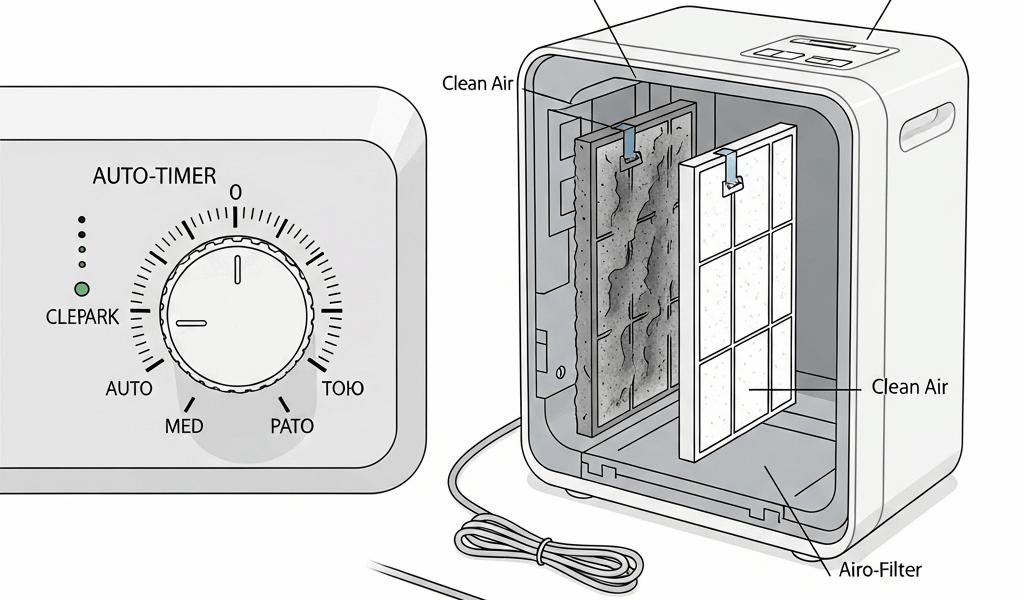
The Most Common Reason — Your Timer Is Set Without You Knowing
Probably should have opened with this section, honestly. This is the reason your air purifier is turning off — and you don’t even realize it’s intentional.
Almost every modern air purifier above $60 has an auto-off timer. You set it once. Life happens. A week later, the timer’s still quietly doing its job while your brain insists something’s broken. That’s it. That’s the whole mystery.
Here’s how to check on the brands people actually own:
- Levoit models: Find the button labeled “Timer” on the control panel. Press and hold it for three seconds. If a number appears — 2H, 4H, 8H — your timer is armed. Press Timer again to cycle through until you hit “OFF.”
- Winix air purifiers: Check the remote or the unit itself for a clock icon. Press it once. The display shows the active timer. Keep pressing to disable it.
- Coway models: The timer button sits separate from power — clock symbol, usually bottom right. One press cycles through 1, 2, 4, and 8 hours. Keep pressing until the display clears. That’s off.
- Generic or older units: Check your manual. The timer is there. It’s always there.
Clear the timer and run the unit uninterrupted for a full hour. If it stays on, you’ve got your answer — no hardware failure, no replacement needed. Just a setting that never got turned off. That’s what makes this fix endearing to us frustrated air purifier owners.
A Clogged Filter Is Triggering Thermal Shutoff
But what is thermal shutoff? In essence, it’s a built-in safety circuit that cuts power when the motor gets too hot. But it’s much more than that — it’s also the most reliable clue that your filter is past due.
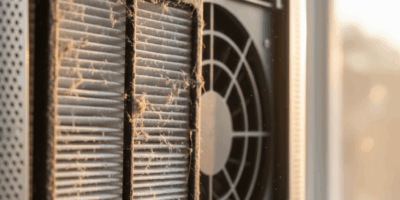
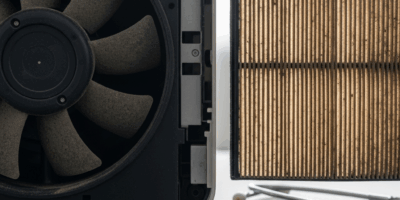
Think of the filter like a lung. Clog it up and the motor strains harder to push air through. Temperature climbs. Thermal sensor kicks in. Shutoff. Every time.
Open the unit right now and pull the filter out. Hold it up to a light. Can you see light through the media, or is it dark and caked solid?
Frustrated by wildfire smoke seasons that chew through filters in weeks instead of months, people in Portland and Seattle go through six filters in a single summer — because nobody warned them that an air quality index above 300 turns a three-month filter into a four-week filter. Don’t make my mistake and assume the packaging timeline applies when the air looks like an old photograph.
Here’s the test sequence:
- Remove the filter. Tap it gently over a trash can — don’t bang it hard, or you’ll drive dust deeper into the media.
- If the filter is gray, brown, or compacted, it’s done. Replace it. A replacement HEPA filter for a Levoit Core 300S or a Winix 5500-2 runs $20 to $35. Worth it.
- If it’s moderately dusty but not caked, vacuum it gently with a brush attachment. One pass. That’s it.
- Reseat the filter correctly — it should slide in and lock with a slight click. Loose filters restrict airflow unevenly and make the motor work harder in one spot.
- Run the unit again. Two hours of uninterrupted operation means the filter was your problem.
While you’re at it, check the pre-filter — the outer layer catching large dust and pet hair. While you won’t need to replace it every month, you will need to swap it out every few months if you have pets or live near construction. It’s $10 to $15 and makes a massive difference in how long your main filter lasts.
Power Supply and Outlet Issues That Cause Random Shutoffs
Loose cords, failing outlets, and overloaded power strips all trigger shutoffs on air purifiers with voltage-protection circuits. I’m apparently sensitive to cheap power strips — my Levoit works fine plugged directly into the wall while a $6 strip from a gas station never works reliably for anything I actually care about. Don’t make my mistake.
Here’s the test sequence. Do this in order.
Test 1: Check the connection at the unit itself. Unplug the air purifier. Look where the cord enters the unit. Gently wiggle it. Any movement at all is a problem. Try reinserting it firmly. A small wrap of electrical tape around the plug creates enough friction to hold it — at least if you want a quick fix while you source a replacement.
Test 2: Try a different wall outlet. Plug directly into a different outlet in a different room. No power strip. No extension cord. Just wall and plug. Two hours. If it stays on, your original outlet is the problem.
Test 3: Check for GFCI trips. Some homes have GFCI outlets — small “Reset” and “Test” buttons right on the face. If your air purifier keeps shutting off and it’s plugged into one of these, the GFCI is tripping. Press Reset or move the unit to a standard outlet.
Test 4: Evaluate your power strip. First, you should unplug everything else sharing the strip — at least if you want an honest test. Run the air purifier alone on it. Still fails? Replace the strip with something rated for at least 15 amps. That $5 gas station strip was never rated for continuous motor loads anyway.
Sensor Malfunctions That Tell the Unit to Turn Off
Most air purifiers carry two sensors: an optical air quality sensor and a particulate sensor. Both collect dust. Both can send false signals that trigger auto-shutoff modes — which is maddening when the air in your house is perfectly fine.
Find the sensor port on your unit. On the Levoit Core 300S and most Coway AP models, it sits on the side or back — a small square opening with a visible lens inside. Shine a flashlight in there. Dust on that lens?
A cotton swab barely dampened with distilled water might be the best option here, as sensor cleaning requires a delicate touch. That is because pushing too hard or using tap water leaves mineral deposits that make the problem worse. One gentle swipe across the external lens. Let it dry 30 seconds. Run the unit.
High humidity — common from October through March in the Pacific Northwest — confuses optical sensors badly. Condensation on the lens reads as “air quality is perfect, power down.” If your unit shuts off on damp days specifically, this is probably your culprit. A small dehumidifier in the same room usually solves it.
When the Unit Itself Is Failing — What to Do Next
You’ve checked the timer. Filter is clean and seated right. Outlet works. Sensors are spotless. Still shutting off.
Now we’re talking actual hardware failure. Before you do anything else — check the warranty.
Under 2 years old: You’re covered. Contact the manufacturer with the model number, purchase date, and a clear description of everything you’ve already tested. Most will replace the unit or ship a replacement motor assembly. Expect 5 to 10 business days.
2 to 4 years old: Probably past standard coverage, but extended warranties exist. Check your original receipt or the email confirmation from your order. Some retailers quietly include free extended coverage you never activated.
Over 4 years old and out of warranty: Replacement usually beats repair — honestly. A solid HEPA air purifier runs $80 to $200 now. Repair labor and parts often land between $60 and $100, with zero guarantee the next component holds. New units come with updated filtration and a fresh warranty. This new idea of simply replacing aging purifiers rather than repairing them took off several years ago and eventually evolved into the standard advice enthusiasts know and follow today. It’s a fair trade-off.


Stay in the loop
Get the latest northwestcleanair.com updates delivered to your inbox.