Why Trees Are the Pacific Northwest’s Best Air Purifiers
The role of trees in air quality has gotten complicated with all the competing claims and studies flying around. As someone who’s studied urban forestry and its environmental benefits, I learned everything there is to know about how our forests actually clean the air. Today, I will share it all with you.
The Pacific Northwest’s famous green landscapes do more than look pretty. Those trees work around the clock removing pollutants, producing oxygen, and cooling the air. Understanding exactly what trees do helps explain why protecting and expanding our urban forests matters so much for public health.
Trees Eat Carbon Dioxide

Through photosynthesis, trees absorb CO2 and release oxygen. This basic biology class fact has enormous implications at scale. The dense forests of Washington and Oregon function as massive carbon sinks, sequestering millions of tons of CO2 annually. That’s what makes Northwest forests endearing to us climate folks—they actively counteract industrial and transportation emissions.
Oxygen Production at Scale
One mature tree produces enough oxygen for roughly four people. Multiply that across millions of acres of forestland and the Northwest’s oxygen contribution becomes staggering. Urban areas benefit particularly when trees are integrated into neighborhoods and business districts.
Natural Pollution Filters

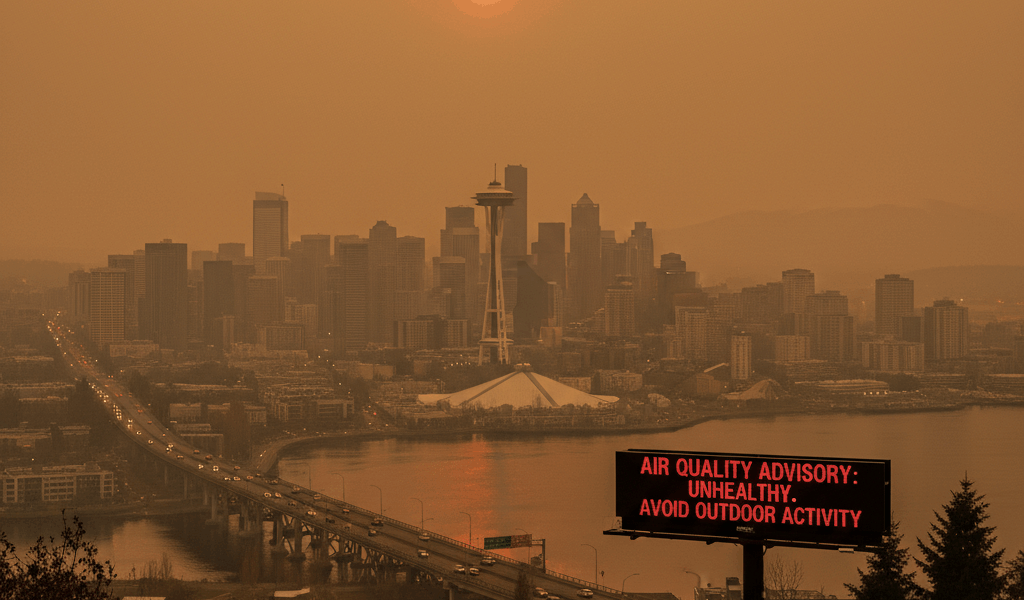
Trees absorb pollutants like sulfur dioxide, ammonia, and nitrogen oxides through their leaves. Chemical processes transform these harmful compounds into less dangerous substances. Particulate matter—the tiny particles from traffic, industry, and wildfires—gets trapped on leaves and bark before it enters your lungs.
Probably should have led with this section, honestly—the filtration benefit is what most directly affects daily air quality for Northwest residents.
Natural Air Conditioning
Trees release water vapor through evapotranspiration, which cools surrounding air. Urban areas with good tree coverage can be several degrees cooler than treeless zones. Lower temperatures mean less air conditioning demand and reduced formation of ground-level ozone. The cooling effect improves air quality while saving energy.
Urban Planning Catches On
Northwest city planners increasingly incorporate green spaces into development. Street trees, parks, and community gardens all contribute to air quality. Urban forests provide multiple benefits—air purification, recreation, aesthetics, biodiversity. The investment returns value on many fronts.
Biodiversity Makes Forests More Effective
Different tree species contribute different benefits. Some excel at carbon sequestration. Others filter specific pollutants more effectively. A diverse forest ecosystem outperforms monocultures at improving air quality. Healthy, diverse forests also resist disease and pests better, ensuring continued environmental services.
Public Health Improvements
Better air quality translates directly to health outcomes. Reduced pollution means fewer asthma attacks, less bronchitis, lower heart disease rates. Time spent in green spaces provides additional benefits—physical activity plus cleaner air plus stress reduction creates a powerful health combination.
Communities Taking Action
Local tree planting programs, education initiatives, and awareness campaigns engage residents in urban forestry. Schools teach kids about environmental stewardship. Businesses sponsor tree planting. These collective efforts expand the forest canopy that benefits everyone.
Research Guides Better Decisions
Scientists study which species work best for urban environments—considering growth rates, pollutant absorption, and climate resilience. Monitoring technology tracks air quality impacts. Data-driven approaches help maximize environmental benefits from tree planting investments.
Challenges Remain
Urban expansion threatens green spaces. Climate change stresses existing forests. Wildfires destroy what took decades to grow. Protecting and expanding the Northwest’s tree cover requires ongoing commitment from government, communities, and individuals.
The role of trees in air quality will only grow more important as environmental pressures increase. Investing in our urban and rural forests is investing in the air quality our children will inherit.




Stay in the loop
Get the latest northwestcleanair.com updates delivered to your inbox.