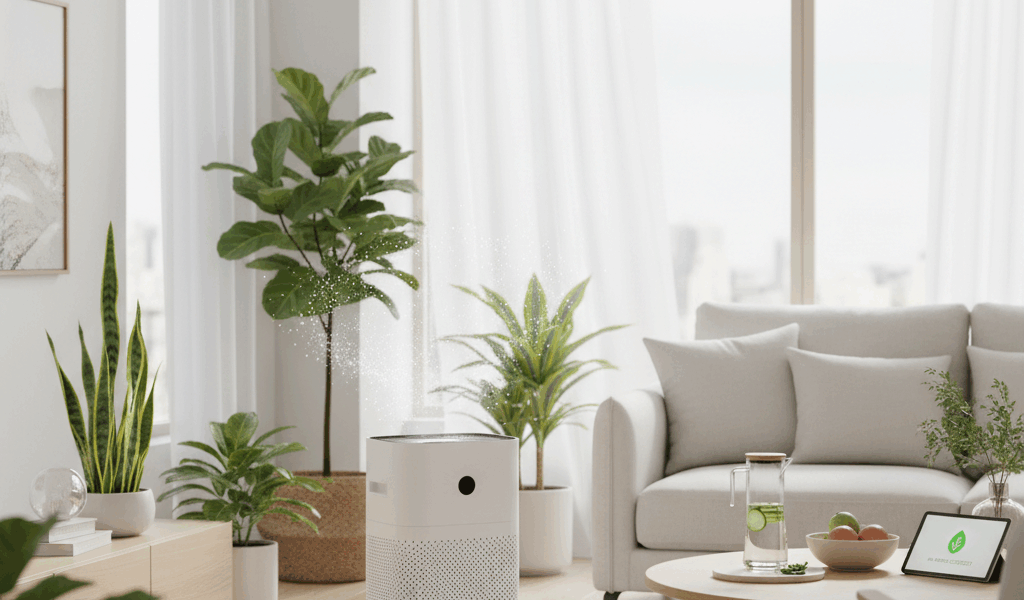
Indoor Air Quality: The Pollution You Don’t See

Indoor air often contains more pollutants than the air outside—and you’re breathing it all day. Cooking fumes, cleaning products, furniture off-gassing, and outdoor pollution sneaking in through cracks all contribute to what ends up in your lungs at home.
What’s Actually Floating Around
VOCs from paints, cleaners, and new furniture release chemicals for months after purchase. Cooking throws particulates and nitrogen dioxide into the air. Mold releases spores that trigger allergic reactions in sensitive people. Dust mites thrive in bedding and carpets, adding their own contribution to the mix.
What Actually Helps

Run those bathroom and kitchen exhaust fans—they exist for a reason. HEPA air purifiers sized for your space make a real difference. Change HVAC filters regularly. When buying paint or cleaning supplies, look for low-VOC options.
Tracking What You Breathe
Indoor air quality monitors track PM2.5, VOCs, CO2, and humidity in real time. Some smart home systems can automatically trigger ventilation when levels climb. Regular monitoring reveals patterns and helps identify problem sources you might not notice otherwise.



Stay in the loop
Get the latest northwestcleanair.com updates delivered to your inbox.