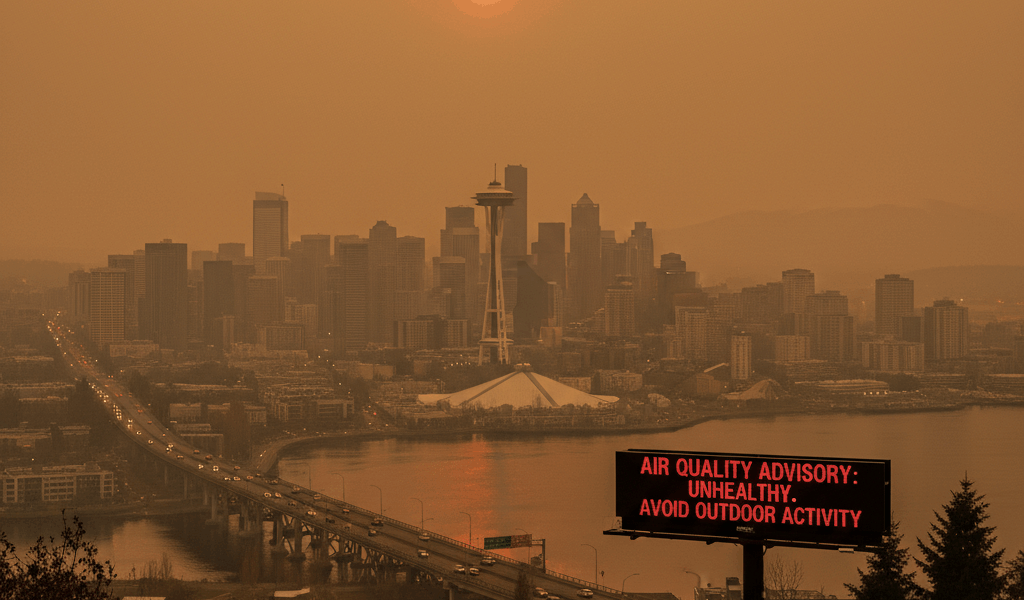
How Northwest Farms Affect the Air We Breathe
Agricultural impacts on air quality in the Northwest have gotten complicated with all the scientific studies and policy debates flying around. As someone who’s spent time understanding how farming practices connect to the air we breathe, I learned everything there is to know about this often-overlooked pollution source. Today, I’ll share it all with you.
More than half our regional land goes to farming. It feeds the economy — but it also feeds the atmosphere with pollutants that affect everyone downwind.
What Farms Actually Release

Agricultural operations produce several distinct pollutants:
- Ammonia from fertilizers and animal waste
- Particulate matter from tilling, planting, and harvesting
- VOCs from pesticides and herbicides
- Methane and nitrous oxide — potent greenhouse gases
Ammonia
Probably should have led with this one, honestly — ammonia is the big agricultural air quality story. It escapes when fertilizers and manure decompose, then reacts with other atmospheric gases to form PM2.5, the fine particulate matter that penetrates deep into lungs and causes serious respiratory problems.
Dust and Particulates
Plowing kicks up huge amounts of dust. Farm equipment runs diesel engines. Harvest operations generate their own particle clouds. These particulates cause asthma, bronchitis, and other respiratory issues. Intensive farming practices make this worse.
Chemical Off-Gassing
Pesticides and herbicides don’t just stay on crops — they release volatile organic compounds into the air. VOCs contribute to ground-level ozone formation, which damages crops (ironically), harms forests, kills wildlife, and causes respiratory problems in people. The chemicals meant to help farming end up hurting everything.
Greenhouse Gases
Methane from livestock digestion and manure, nitrous oxide from fertilized soil — these gases trap heat way more effectively than carbon dioxide. Climate change feeds back into air quality problems, making this a compounding issue.
How Seasons Change the Picture
That’s what makes agricultural air pollution endearing to researchers — it shifts predictably through the year:
- Spring: Fertilizer application and planting generate ammonia and dust
- Summer: Heat increases VOC emissions from applied chemicals
- Fall: Harvest creates dust clouds and residue burning releases particles
- Winter: Confined livestock operations concentrate ammonia and methane
What This Does to Health and Environment

PM2.5 and ground-level ozone top the concern list. Both cause respiratory and cardiovascular disease, especially in people with existing conditions. Ecosystems suffer too — ozone reduces biodiversity and damages vegetation. Greenhouse gas contributions accelerate climate change, which shifts weather patterns and agricultural zones in ways that compound future problems.
What’s Being Done
Regulations and innovative practices aim to reduce agricultural emissions:
- Conservation tillage that disturbs soil less, kicking up less dust
- Crop rotation and cover cropping that reduce fertilizer needs
- Precision farming using GPS and sensors to minimize chemical applications
- Air scrubbers and biofilters on livestock operations to capture ammonia and other gases
- Proper storage and application techniques for pesticides and herbicides
Better Farming Techniques
Conservation tillage means less soil disturbance and less airborne dust. Rotating crops and using cover crops improves soil health, reducing dependence on synthetic fertilizers. These practices help air quality while often improving farm productivity — a genuine win-win.
Technology Solutions
GPS-guided equipment applies exactly what’s needed where it’s needed, rather than blanket coverage. Sensors detect soil conditions and pest pressure. Using less chemical input means less ends up in the atmosphere. The economics work for farmers while the air quality works for everyone.
Emission Capture
Large livestock operations increasingly use scrubbers and biofilters to capture gases before release. It adds cost but addresses the concentrated pollution these facilities generate. Regulations are pushing adoption where voluntary uptake lags.
Where This Is Headed
Emerging approaches keep improving. Biochar added to soil can reduce nitrous oxide emissions. Robotics and AI enable even more precise farming with less waste. Policy support for sustainable practices encourages wider adoption of emission-reducing techniques.
Agricultural air quality isn’t just a farm problem — it’s a regional public health issue. Understanding the connection between what happens in fields and what ends up in everyone’s lungs helps build support for the practices and policies that actually make a difference.

Stay in the loop
Get the latest northwestcleanair.com updates delivered to your inbox.