What AQI Actually Measures
AQI has gotten complicated with all the conflicting advice flying around. So let me cut straight to it: that number — usually somewhere between 0 and 500 — is telling you how much invisible garbage is floating in the air outside your window right now. Mostly, it’s measuring PM2.5. Fine particulate matter. The stuff wildfire smoke in the Pacific Northwest is absolutely loaded with.
But what is PM2.5? In essence, it’s particles so microscopically small they bypass your nose hairs entirely and embed themselves directly in your lung tissue. But it’s much more than that — it’s also a delayed story. EPA regulatory monitors average their readings over several hours, which means your 2 p.m. AQI reading actually reflects conditions from earlier in the day. That lag is real, and it matters when you’re standing at your window deciding whether to close it right now.
The index technically tracks other pollutants too — PM10 (larger dust and pollen), ozone, nitrogen dioxide, sulfur dioxide. During wildfire season in Oregon, Washington, and Northern California, though? Nobody’s watching ozone. Everyone’s watching PM2.5 climb. That’s the number making your eyes water and your throat feel like you swallowed sandpaper.
The Six AQI Levels and What Each One Means Inside
Good (0–50) — AQI Green
Windows open. Purifier off — at least if nobody in your household has asthma or is pushing 65 or older. This is the air quality equivalent of “genuinely nothing to worry about.” I kept my windows cracked year-round at this level for years without giving it a second thought.
Kids outside. HVAC on standard settings. Nobody at risk. That’s the whole story at AQI Green.
Moderate (51–100) — AQI Yellow
Windows can stay open, but you should start paying attention — at least if you have anyone sensitive under your roof. Purifier on low or medium if you have one. People with asthma or heart conditions might start noticing something. Elderly relatives should ease up on outdoor exertion.
Probably should have set up alerts sooner, honestly. My neighbor’s 74-year-old mother started complaining of shortness of breath during an AQI 87 afternoon, and none of us saw it coming because nobody was monitoring.
- Still safe for most outdoor activity
- Activate your purifier if anyone in the house is sensitive
- Check back in 2 hours
Unhealthy for Sensitive Groups (101–150) — AQI Orange
Close your windows now. Turn your purifier to high. Children under 14, adults over 65, and anyone with respiratory or heart conditions should stay indoors — or seriously cut down their time outside. Don’t negotiate with this one.
At AQI 115 last August, my 8-year-old’s soccer practice got moved indoors. The coaches weren’t taking chances. That’s the right call every time at this level.
- Windows and exterior doors should be closed
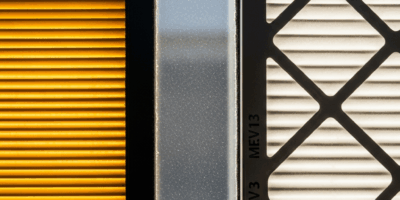
- Run your HEPA or MERV 13 purifier continuously on high
- Keep a backup battery-powered purifier in the bedroom for overnight
- Avoid exercise outdoors
Unhealthy (151–200) — AQI Red
Every window. Every door. Sealed tight. Purifier on maximum, around the clock. Everyone limits outdoor time — not just the sensitive groups. Everyone.
At AQI 180, I sealed my bedroom window frame with blue Scotch painter’s tape because the old double-hung had a gap I’d never bothered fixing. Ran my Coway AP-1512HH before and after. The difference showed up clearly on my indoor monitor within forty minutes. Don’t make my mistake — find those gaps before the air gets bad, not during.
- Seal temporary gaps with painter’s tape if needed
- Run two purifiers simultaneously if you have access to a second unit
- Consider N95 masks if you must go outside
- Check your purifier’s filter every 24 hours — it’s collecting fast at this level
Very Unhealthy (201–300) — AQI Purple
Emergency mode. Windows locked. Purifiers running constantly. Schools close. Public health agencies push out guidance. Even healthy adults start experiencing symptoms — headaches, tightness in the chest, fatigue that hits earlier than it should.
This is rare across most of the Pacific Northwest. Then September 2020 happened. Labor Day fires pushed Portland’s AQI past 500 in certain neighborhoods. Noon looked like dusk. Orange sky, ash falling on cars. That was a Tuesday.
- All outdoor activity canceled
- Pets stay indoors
- Run multiple air purifiers if available
- Keep N95 masks accessible for any necessary outdoor trips
- Stock filtered water and food — supply chains can be disrupted
Hazardous (301+) — AQI Maroon
Everything stops. This is the air quality equivalent of a hazmat situation outside your front door. Some areas get evacuation recommendations. If you’re still home, run every air-filtering device you own.
Honestly? If you’re watching AQI 301 appear on your ZIP code, you should be looking at evacuation routes — not shopping for room purifiers. Call your local emergency management office. This is past the point where indoor air management is the right frame.
How to Check AQI for Your Exact Neighborhood
Here’s where most guides drop the ball. They say “check your local AQI” without mentioning that EPA AirNow monitoring stations are genuinely sparse. In Portland, the nearest regulatory monitor might be sitting 8 miles away — on the far side of a ridge that deflects wildfire smoke completely differently than your actual street does. That’s what makes hyperlocal data so endearing to us Pacific Northwest residents who’ve learned this the hard way.
Use three tools, in this order:
- AirNow.gov — The official EPA network. Find monitors within 10 miles of your actual address. This is your regulatory baseline, full stop.
- PurpleAir.com — Thousands of low-cost sensors deployed by residents and small businesses across the region. Search your specific street or neighborhood. PurpleAir readings often run 20–40 AQI points higher than AirNow because they report raw PM2.5 without the EPA’s time-averaging formula applied. Neither source is wrong — they’re measuring differently. I’m apparently sensitive enough that I once convinced myself my indoor air was dangerously bad based on a raw PurpleAir reading, and the AirNow-calibrated number told a much calmer story.
- IQAir.com — Combines official monitor data and crowdsourced readings in a cleaner interface than PurpleAir. Better for setting ongoing notifications, honestly.
Terrain shapes everything in this region. A ridge two blocks from your house can funnel smoke in a direction that leaves one street choking while the next one breathes easy. A PurpleAir sensor sitting on that ridge shows you what’s actually heading toward you — not what a monitor six miles downwind is registering.
When to Close Up the House and Run Your Purifier
AQI 100 is your window-closing threshold. Write it down somewhere. Below 100, outdoor air is genuinely fresher than whatever your home has been recirculating. Above 100, you want outdoor air staying outside — and you want filtration running inside.
Basic purifiers work at AQI 150+, but not fast enough in large spaces without the right specs. A 200-square-foot bedroom with a solid HEPA unit running on high can pull indoor AQI down by 30–50 points within an hour. A 600-square-foot living room needs either a larger unit or significantly more runtime to achieve the same result. At AQI 200 and above, MERV 13 or true HEPA filtration running continuously — not intermittently — might be the best option, as this range requires sustained air turnover. That is because particles are being reintroduced through every small gap and opening faster than a purifier cycling on and off can keep up with.
Flip your purifier box over and find the CADR rating. It should cover your room’s square footage at a minimum of two full air changes per hour.
AQI Moves Fast — How to Set Up Free Alerts
Download the AirNow app or head to AirNow.gov and drop in your ZIP code. Set an alert for AQI 100. You’ll get a push notification the moment your area crosses into yellow — which typically gives you a 30-to-60-minute window before it climbs toward orange. That’s enough time to close up the house and start your purifier before conditions deteriorate.
IQAir offers free notifications too, and they sometimes fire faster than AirNow because the platform pulls from multiple data sources simultaneously. So, without further ado, set both up tonight — before wildfire season reminds you why you meant to.
Knowing your AQI is step one. Having the right filtration already running before fire season arrives is step two. The order matters.
If you want to measure particle conditions at your own home, read our PurpleAir monitor guide for accuracy, placement and AirNow comparison guidance.



Stay in the loop
Get the latest northwestcleanair.com updates delivered to your inbox.