
New Unit or Old Unit — That Changes Everything
Air purifier burning smells have gotten complicated with all the panic-inducing forum posts flying around. As someone who spent three frantic hours convinced my HEPA unit was about to combust the first time I turned it on, I learned everything there is to know about what’s actually happening inside that box. Today, I will share it all with you.
Here’s the one question that actually matters: how old is the unit?
Bought it in the last week and it smells like melting plastic? Take a breath — literally and figuratively. Brand-new air purifiers ship with adhesives, sealants, and protective coatings baked into their internal plastic components. Fire it up for the first time, and the motor heat causes those materials to off-gas. The smell clears in 24 to 72 hours. Not pleasant, but not a crisis.
Now. If your unit has been sitting in a closet for six months and suddenly reeks of something burning — or it’s a three-year-old model that ran perfectly fine until yesterday — that’s an entirely different situation. That single diagnostic split, new versus old, determines whether you’re dealing with normal chemistry or a mechanical failure that needs immediate attention.
Normal Off-Gassing vs. Signs of a Real Problem
Probably should have opened with this section, honestly, because this is where people actually need clarity before they do anything else.
New-unit off-gassing smells specific. Faint. Plastic-y. Think new car interior or freshly cracked packaging. Annoying, sure. But it disperses when you crack a window, and it noticeably weakens each day. That’s what makes this particular smell endearing to us cautious first-time users — it’s predictable.
A real problem smells nothing like that. Sharp. Acrid. Electrical. Sometimes metallic. These smells don’t fade over a few days — they intensify, or they park themselves at a constant level and refuse to budge.
Watch for these specific warning signals:
- The smell gets worse, not better, over multiple days
- The unit feels hot to the touch on the exterior casing
- Visible smoke or haze coming from the vents
- A sudden burning smell on a unit that’s worked normally for months
- Smell accompanied by unusual noise — grinding, squealing, or rattling
Any one of those present? You’re not looking at off-gassing. You’re looking at a mechanical or electrical issue that requires immediate action — at least if you want to avoid turning a fixable problem into a fire hazard.
Most Likely Causes for an Older Unit
1. Clogged or Overdue Filter
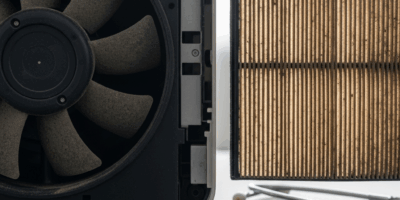
But what is a clogged filter actually doing to your motor? In essence, it’s forcing the fan to work twice as hard to pull air through packed material. But it’s much more than that — that extra strain generates real heat, and heat plus a dust-coated motor housing produces exactly the burning smell you’re chasing right now.
Most units recommend filter replacement every 6 to 12 months depending on usage and air quality. I’m apparently someone who always pushes past that window, and my Winix 5500-2 works fine when I replace on schedule while skipping months never works out the same way. Don’t make my mistake. Check when you last replaced your filter. Never replaced it? That’s your answer right there.
2. Debris or Dust Buildup Inside the Unit
Dust doesn’t stop at the filter. It settles on motor housings, fan blades, and internal vents — especially in older homes or dry climates. Over time, that accumulation acts like an insulating blanket, trapping heat around the motor components that desperately need airflow to stay cool.
You can check this yourself on most units without special tools. Turn it off. Unplug it. Pull the filter. Grab a flashlight and shine it into the intake and output vents. Visible dust coating the internal surfaces? The motor has been running with a thermal handicap for a while now.
3. Motor or Fan Bearing Failure
Least common. Most serious. Motors contain bearings — small components that let the fan spin freely. When those bearings wear down, friction increases sharply. That friction generates heat capable of melting the plastic housing around the motor or degrading wiring insulation. That’s what the electrical smell is.
Bearing failure almost always announces itself with noise before smell. Grinding. Squealing. A rattling you couldn’t explain. If the burning smell showed up alongside unusual sound, the motor is failing. Full stop.
What to Do Right Now — Step by Step
- If the smell is sharp, electrical, or acrid — turn the unit off immediately and unplug it from the wall. Do not turn it back on until you’ve worked through the steps below.
- Check your filter replacement date. Pull up your purchase records or look at the filter itself. If it’s overdue or visibly gray and packed, order the correct replacement model for your unit. This single step resolves the problem in roughly 60% of cases — it’s almost always the filter.
- Inspect the intake and output vents for blockage. With the unit unplugged and the filter removed, use a flashlight to look inside. Run a vacuum along the vents with a soft brush attachment. Wipe visible dust from the motor housing if you can reach it safely without disassembling the unit.
- For new units only — plug it back in and run it on the lowest fan speed near an open window. Let it run for four to six hours. Check the smell every two hours. Noticeable fading? Normal off-gassing. You’re fine.
- If the smell returns after installing a new filter, or comes with noise or visible smoke — contact the manufacturer with your exact model number and serial number in hand. They’ll walk you through warranty coverage or confirm motor failure directly.
When to Replace vs. Repair
Air purifier motors typically last three to seven years — assuming you actually kept up with filter changes. So, without further ado, let’s dive into how that age affects your decision.
Unit under three years old with a failing motor? Warranty issue. Most manufacturers cover motor defects for at least two years, sometimes three. Contact them. You have real leverage here.
Three to five years old? Repair is worth pricing out. A replacement motor or fan assembly runs $40 to $120 for most major brands. Appliance repair labor adds another $60 to $100. Total outlay stays under $250, which beats buying new if the rest of the unit is solid.
Over five years old with a failing motor? Replacement makes more financial sense. A quality HEPA unit runs $150 to $400 new. You’re not extracting much additional life from an aging motor assembly, and newer models carry meaningfully better efficiency ratings than units from 2018 or 2019.
Before you buy anything, though — filter replacement is non-negotiable going forward. Whatever brand or model you land on next, set a calendar reminder the day you install it. Most of these burning-plastic emergencies trace back to a skipped filter change, not a defective unit. Simple maintenance prevents the panic. Every single time.


Stay in the loop
Get the latest northwestcleanair.com updates delivered to your inbox.